

Choosing the 2026 best Bathroom Hardware types requires more than comparing finishes and online prices. Global buyers need products that perform reliably across different climates, building systems, and installation practices. Bathroom Hardware now includes towel bars, robe hooks, toilet paper holders, shower fittings, grab bars, cabinet handles, and concealed accessories. Each category affects daily comfort, cleaning time, and long-term maintenance.
A practical selection starts with material and construction. Stainless steel, solid brass, and carefully protected aluminum can resist moisture, but quality varies between suppliers. Look closely at wall anchors, screw strength, plating thickness, and the smoothness of welded joints. Small details matter. A towel bar that loosens after several months creates unnecessary service costs. In coastal regions, salt air may damage low-grade finishes faster than expected. Buyers should request technical drawings, load data, finish samples, and clear warranty terms before placing large orders. They should also confirm compatibility with local pipe connections, wall structures, and accessibility requirements. Certifications can support confidence, yet they should be checked against the destination market’s current rules. A logo alone proves little.
Experience also shows that the cheapest option is rarely the most economical. Still, premium hardware is not automatically better. A supplier’s production records, quality-control process, replacement support, and communication deserve equal attention. Some product comparisons remain imperfect because performance depends on installation quality. That limitation should be acknowledged. This guide examines practical Bathroom Hardware types for hotels, residential projects, distributors, and renovation buyers worldwide, with attention to durability, design flexibility, safety, and responsible purchasing decisions.
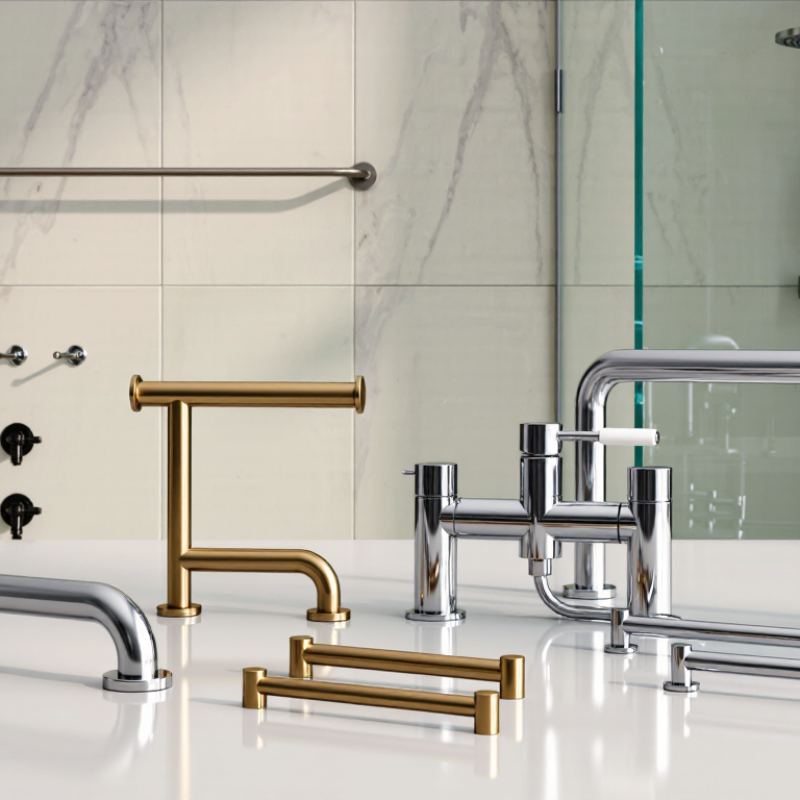
Bathroom hardware refers to the functional and decorative components installed in or around a bathroom. It includes faucets, shower fittings, drains, towel bars, robe hooks, toilet accessories, mirrors, and cabinet handles. These products support water control, hygiene, storage, safety, and daily convenience. In practical purchasing work, I assess both visible finish and hidden construction. Thread standards, mounting depth, corrosion resistance, and replacement access can determine long-term value.
The market has several global categories. Water hardware covers faucets, shower systems, valves, and hand showers. Installation hardware includes brackets, connectors, drains, and concealed supports.
Bathroom accessories include shelves, towel rails, toilet roll holders, and grab bars. Decorative hardware focuses on handles, frames, and coordinated surface finishes.
Commercial buyers often require stronger materials, easier cleaning, and frequent-use testing. Residential buyers may prioritize appearance, comfort, and installation simplicity.
Classification is not always clean. A shower rail can be both a water product and a safety support. Regional plumbing rules, water pressure, metric sizing, and installation habits also change product suitability. Buyers should verify technical drawings, material descriptions, warranty terms, and spare-part availability before ordering. Surface color alone proves little. Details can mislead. A polished finish may look impressive but fail in humid environments if the base material is poorly protected. Careful sampling remains useful, although samples cannot fully predict years of daily use.

Bathroom hardware works best when each piece matches its actual application. Global buyers should separate daily-use fittings from decorative accessories. Towel bars suit shared bathrooms with wall space, while towel rings work better beside compact sinks. Robe hooks help in family bathrooms, but they need enough clearance from wet shower areas. That detail matters.
Toilet paper holders should allow easy replacement and resist loosening under repeated use. Shower caddies need drainage openings, stable mounting, and corrosion-resistant materials for humid rooms. Wall shelves are useful near basins, yet their fixing method must match the wall structure. Tile, concrete, and drywall require different anchors. Small errors become expensive repairs.
Grab bars support safer movement in accessible bathrooms and need secure installation into suitable structural points. They should not be treated as ordinary towel rails. In hotels, schools, and offices, heavy-use hardware benefits from rounded edges, easy cleaning, and replaceable fasteners. Stainless steel, coated metal, and engineered plastic can perform differently under moisture and cleaning chemicals. Check technical data carefully.
I once saw a towel hook installed behind a door. It looked tidy, but the door struck it repeatedly. Good design is not only about appearance. Measure reach, door swing, user height, and cleaning access before selecting hardware. Some products still claim universal suitability, which deserves more careful questioning.
2026 Best Bathroom Hardware Types for Global Buyers
Materials, finishes, and durability standards should guide every bathroom hardware purchase. Brass remains practical for taps, valves, and concealed fittings because it machines well and resists pressure. Stainless steel 304 suits dry or moderately humid rooms. Coastal projects may need 316 stainless steel, especially near salt air. Zinc alloy can reduce cost, but exposed parts may age faster when water sits in joints.
Finish choice changes maintenance. PVD coatings usually provide strong color retention and scratch resistance when properly applied. Electroplated chrome is still useful for easy cleaning and a bright appearance. Matte finishes hide fingerprints, yet some textured surfaces collect soap residue. Test the finish against local water hardness and cleaning products. Real bathrooms are less controlled than showrooms.
Regional standards also matter. European buyers should check relevant EN requirements and corrosion testing, such as ISO 9227 methods where applicable. North American projects often reference ASTM tests and local plumbing codes. Australia and New Zealand may require WaterMark approval for regulated plumbing products. Humid Asian and Middle Eastern markets need careful salt-spray and heat-resistance verification. Ask for test reports, coating thickness, material grades, and batch traceability. A certificate helps, but it is not a guarantee. Installation quality can still decide service life. Even strong hardware fails when threads are overtightened or water remains trapped behind a wall plate.
2026 Best Bathroom Hardware Types for Global Buyers
Smart Features, Water Efficiency, and Sustainable Design Trends
Bathroom hardware is moving beyond appearance. Buyers now assess touchless controls, leak alerts, and temperature memory. These features can improve comfort and reduce wasted water. Yet smart hardware needs reliable sensors and simple manual controls. A beautiful interface is not enough.
Water efficiency deserves close attention. Choose aerators, dual-flush mechanisms, and flow regulators that match local pressure conditions. A low-flow fitting may perform poorly in a building with weak pressure. Check verified flow data, installation guidance, and replacement-part availability. Local certification also matters, because requirements differ across markets.
Sustainable design is becoming more practical. Recycled metals, repairable cartridges, and durable finishes can reduce replacement waste. Packaging matters too. Compact, recyclable packaging lowers transport volume. I have found that small maintenance details often decide long-term value. Removable filters help. Standard connections help more.
Smart? Sometimes unnecessary. A sensor can fail after years of humidity, especially when batteries are difficult to replace. Buyers should compare standby power, warranty coverage, and repair access before choosing connected hardware. Sustainability is not only about materials. It also means keeping a product useful for many years. Some manufacturers still emphasize novelty over serviceability. That deserves closer review.
Water-saving potential of selected bathroom hardware compared with conventional U.S. baseline flow or flush limits.
Reference benchmarks: WaterSense showerheads use up to 2.0 gpm versus the 2.5 gpm federal maximum; WaterSense bathroom faucets use up to 1.5 gpm versus the 2.2 gpm federal maximum; WaterSense toilets use 1.28 gpf or less versus the 1.6 gpf federal maximum. Potential savings are calculated from these limits.
2026 Best Bathroom Hardware Types for Global Buyers
Global buyers usually compare faucets, shower systems, towel bars, robe hooks, and floor drains by use, not appearance alone. A brass faucet may feel solid, yet internal cartridges and plating determine long-term performance. I recommend checking samples under repeated operation, water-pressure tests, and surface inspection. Look for smooth threads, even coatings, secure connections, and clear installation instructions. Small defects become expensive after overseas delivery.
Compliance requires more than a certificate attached to an email. Requirements differ by destination, especially for drinking-water contact, lead content, pressure resistance, fire safety, and packaging. Ask suppliers for current test reports, material declarations, batch traceability, and documented quality procedures. Confirm whether reports match the exact model and production site. They sometimes do not. Local testing may still be necessary.
Cost comparisons should include tooling, minimum order quantities, spare parts, shipping volume, duties, inspection, and warranty claims. A low factory price can become costly after leakage returns. Supplier reliability matters as much as unit cost. Review production capacity, response time, change-control records, and previous export experience. Order a pilot batch before scaling. Keep one approved sample for future comparison. No checklist is perfect. I have seen attractive samples fail after packaging changes, so buyers should reassess quality whenever materials, factories, or processes change.
| Hardware Type | Common Materials | Quality Indicators | Corrosion & Finish Considerations | Relevant Compliance Checks | Relative Cost Level | Typical Buyer Priorities |
|---|---|---|---|---|---|---|
| Bathroom Faucets and Mixers | Brass, stainless steel, zinc alloy for selected non-pressure parts, ceramic cartridge components | Pressure testing, cartridge cycle testing, stable water flow, low leakage rate, consistent wall thickness, traceable raw materials | Coating adhesion, salt-spray or corrosion testing where specified, resistance to dezincification for applicable brass components | Applicable sanitary tapware standards such as EN 200 or ASME A112.18.1; potable-water contact requirements such as NSF/ANSI/CAN 61 may apply by market | Medium to High | Water safety, cartridge durability, flow performance, finish consistency, spare parts, warranty support |
| Shower Systems and Hand Showers | Brass, stainless steel, engineering plastics, silicone nozzles, stainless steel hoses | Pressure and flow testing, reliable diverter operation, anti-limescale nozzle design, hose flex-cycle performance | Stainless steel or properly protected brass is preferred for wet areas; surface finishes should resist household cleaners and humidity | Applicable shower fitting and plumbing requirements; backflow protection and temperature-control rules may apply to thermostatic products | Medium to High | User safety, stable temperature, water efficiency, installation compatibility, cleaning convenience |
| Towel Bars, Rings, and Hooks | Stainless steel, brass, aluminum, zinc alloy, tempered glass for selected decorative parts | Load-bearing performance, secure mounting plate, accurate drilling pattern, concealed fixing quality | Stainless steel generally provides strong humidity resistance; plated finishes require adhesion and abrasion checks | General product safety, material restrictions under applicable REACH or RoHS rules, and local construction requirements where relevant | Low to Medium | Mounting strength, rust resistance, visual consistency, packaging protection, easy installation |
| Soap Dispensers and Soap Dishes | Stainless steel, brass, ceramic, glass, ABS or other engineering plastics | Pump cycle life, leak resistance, chemical compatibility, stable wall or countertop mounting | Drainage design reduces standing water; finishes should tolerate soap, shampoo, alcohol-based cleaners, and moisture | Material and chemical safety requirements vary by market; food-contact certification is not automatically required for bathroom soap accessories | Low to Medium | Pump reliability, hygienic cleaning, refill convenience, leak prevention, replacement availability |
| Toilet Paper Holders and Robe Hooks | Stainless steel, brass, aluminum, zinc alloy, durable polymers | Firm fixing, smooth edges, controlled roll movement, resistance to loosening during repeated use | Sealed or well-protected surfaces help prevent staining and corrosion in high-humidity bathrooms | General consumer-product safety and applicable chemical restrictions; accessibility requirements may apply in public or commercial facilities | Low | Simple installation, compact packaging, finish matching, secure mounting, competitive landed cost |
| Grab Bars and Support Rails | Stainless steel, powder-coated steel, aluminum, reinforced mounting components | Static load testing, pull-out resistance, wall-anchor compatibility, anti-slip grip, rounded and safe edges | Stainless steel is commonly selected for wet environments; concealed joints should prevent water ingress and hidden corrosion | Accessibility and structural requirements such as ADA/ICC A117.1 or local equivalents may apply; installation substrate must be verified | Medium | User safety, verified load rating, professional installation, wall structure, documentation and liability control |
| Floor Drains and Linear Drains | Stainless steel, ABS or PVC drainage components, EPDM or similar sealing materials | Drainage capacity, water-seal performance, grate load rating, removable strainer, dimensional accuracy | Stainless steel grades suitable for wet environments help reduce rust; welds and corners should be smooth and easy to clean | Local plumbing codes, waterproofing requirements, drainage standards, and product testing requirements must be checked by destination market | Medium | Leak prevention, installation dimensions, cleaning access, tile compatibility, replacement seals |
| Bathroom Mirrors and Cabinets | Silvered or aluminum-coated glass, stainless steel, aluminum, moisture-resistant boards, LED components | Glass safety, edge finishing, moisture resistance, hinge cycle life, electrical insulation and thermal management for illuminated models | Back-coating protection and sealed edges reduce mirror corrosion; bathroom humidity requires suitable enclosure design | Safety-glazing rules, low-voltage or electrical-product requirements, ingress protection rating where applicable, and local wiring codes | Medium to High | Safety, moisture resistance, electrical compliance, packaging, installation support, after-sales replacement parts |
©2024 Pine Vista LLC, DBA Design Manufacturing Group. All Rights Reserved.


©2024 Pine Vista LLC, DBA Design Manufacturing Group. All Rights Reserved.
