

China Top 10 Wall-Mounted Display Rack Manufacturers?

Choosing a supplier for Wall-Mounted Display Racks takes more than comparing product photos or quoted prices. This guide introduces ten manufacturers in China and considers the practical details buyers should examine before requesting a sample or quotation. These include rack materials, finish options, dimensions, load capacity, mounting hardware, and the degree of customization available. Small details matter. A rack that looks sturdy online may not suit a narrow shop wall or a heavier product range.

The comparison is intended as a starting point, not a universal ranking. Manufacturer capabilities and product specifications can change, so confirm current information directly with each supplier. Ask for drawings, material details, installation instructions, and written load ratings. If possible, review a sample or inspect a completed project. Check how the rack will be packed, how long production may take, and what support is available after delivery. These questions help connect a supplier’s claims with evidence. That takes time.

The right choice depends on your store layout, merchandise, budget, and installation needs. A low price may not reflect the full cost of shipping, setup, or future adjustments. Likewise, an attractive finish may need careful maintenance in a busy retail space. No shortlist can cover every requirement, and some details may be difficult to compare fairly. Use the profiles below to build a focused list of candidates, then verify the specifics that matter to your project.
China Top 10 Wall-Mounted Display Rack Manufacturers?

What Are Wall-Mounted Display Racks and How Are They Used?

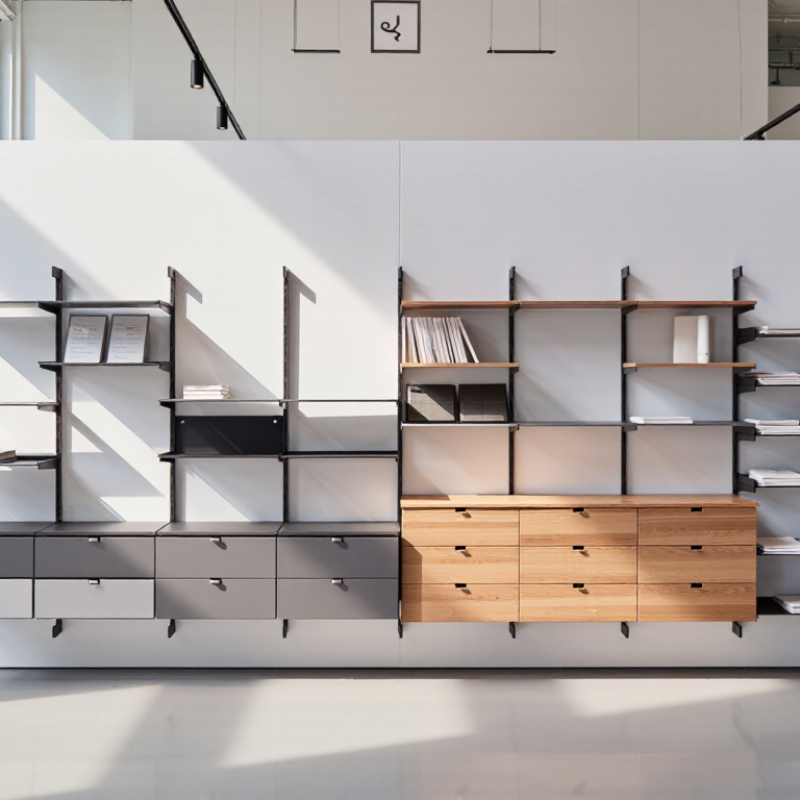
Wall-mounted display racks are fixtures attached to a wall to present products, tools, or information while keeping floors clear. Common designs include shelves, slat panels, pegboards, and rails with adjustable hooks. Each suits different items: a shallow shelf can hold boxed goods, while hooks keep lightweight accessories visible and easy to reach. Check the rack’s rated load and the wall material before installation. A rack fixed to a stud may support a different load than one mounted on drywall alone.

Measure twice.

In shops, these racks help organize merchandise by category and place frequently handled items at a comfortable height. In workshops, they can keep small tools within view and off a crowded bench. Offices may use them for brochures or samples. Good spacing matters: leave enough room for hands to remove items, and avoid blocking signs or walkways. Small details matter. A neat display can still be hard to use if labels sit too high or hooks are packed tightly. There is no single ideal layout; test it with the actual items, then adjust after observing how people reach and restock them.

How China’s Wall-Mounted Display Rack Industry Is Structured

China’s wall-mounted display rack industry is best understood as a supply network, not a single factory category. Metalworking shops cut and bend steel, then add welding, powder coating, and load testing. Other suppliers work with wood, acrylic, or mixed materials. Downstream firms combine these parts into store-specific fixtures, while export-oriented manufacturers often provide OEM or ODM production. The National Bureau of Statistics reported that China’s retail sales of consumer goods reached RMB 47.15 trillion in 2023, up 7.2% year on year. This broad demand indicator does not measure rack sales directly, but it helps explain why retailers keep renewing display spaces.

Buyers usually compare more than unit price. They check bracket thickness, hole spacing, coating consistency, carton protection, and installation drawings. A practical factory audit should include a sample inspection and a review of load-test records. Small details matter. Supply capacity is uneven: some workshops handle short custom runs well, while others depend on standardized production for stable costs. One gap remains. Supplier profiles may describe machinery clearly but provide limited evidence about real-world durability. Ask how the rack performs after repeated loading, not just how it looks in a catalog. Industry structure varies by region and product type, so a “top manufacturer” list alone cannot show who fits a specific project.

China Top 10 Wall-Mounted Display Rack Manufacturers? - How China’s Wall-Mounted Display Rack Industry Is Structured

This table outlines ten common parts of the industry rather than ranking or naming individual manufacturers. Product specifications and capabilities vary by supplier and project.

No. Industry Dimension Typical Products or Activities How It Shapes the Supply Chain
1 Steel rack fabrication Wall standards, brackets, shelves, hooks, and back panels made from formed or welded steel. Metalworking capacity, coating options, and dimensional consistency are important for durability and fit.
2 Aluminum display systems Lightweight rails, frames, channels, and modular components for retail, exhibition, and interior applications. Extrusion profiles may be cut, drilled, finished, and assembled into project-specific configurations.
3 Wood and panel products Decorative shelves, cabinetry, slatwall panels, and display backboards using wood or engineered panels. Surface finish, edge treatment, panel thickness, and moisture conditions affect appearance and service life.
4 Acrylic and plastic components Product holders, sign pockets, dividers, protective covers, and lightweight display accessories. These parts are often produced separately and integrated with metal or panel-based rack systems.
5 Mounting and load design Fixed brackets, adjustable rails, cleats, and other wall-attachment arrangements. Safe load capacity depends on the rack design, fasteners, wall construction, installation method, and load distribution.
6 Surface finishing Common finishes include powder coating, plating, anodizing for suitable aluminum parts, laminates, and wood finishes. Finish selection affects appearance, corrosion resistance, cleaning requirements, and suitability for the installation environment.
7 Standard and custom production Standard modules may be combined with custom dimensions, colors, graphics, accessories, or packaging. Modular products can simplify repeat orders, while custom projects typically require drawings, samples, and specification approval.
8 Manufacturing processes Typical operations include cutting, punching, bending, welding, machining, surface treatment, assembly, and inspection. Suppliers may perform every operation in-house or source processes such as finishing from specialist subcontractors.
9 Quality and compliance checks Checks can cover dimensions, finish, assembly, packaging, and project-specific load or material requirements. Buyers should confirm applicable market requirements and request relevant test reports or documentation for the intended use.
10 Export and delivery coordination Export orders commonly involve product drawings, packaging specifications, shipment planning, and installation information. Flat-pack design, carton protection, labeling, and clear installation instructions can help manage freight and site assembly.

What Criteria Define a Leading Chinese Rack Manufacturer?

A leading Chinese wall-mounted display rack manufacturer should prove performance, not simply offer a low quotation. Ask for load-test records showing how each shelf behaves under a stated weight and mounting condition. Check weld consistency, bracket alignment, coating thickness, and resistance to corrosion. A sample rack may look sturdy, yet fail when fixed to a weaker wall. Installation guidance matters, too.

Manufacturing scale is not the same as product quality. World Steel Association’s World Steel in Figures 2024 reports that China produced 1,019.1 million tonnes of crude steel in 2023. That figure shows material-industry capacity, but it cannot verify any factory’s rack design or steel grade. Request material certificates, traceable batch records, inspection plans, and clear defect-handling terms. For sustainability claims, compare measured energy and emissions data with the International Energy Agency’s 2023 steel-sector analysis, which estimates 2.6 gigatonnes of direct CO₂ emissions in 2022. No checklist is perfect. Still, documented tests, stable production, realistic lead times, and usable drawings offer stronger evidence than polished showroom photos.

What Defines a Leading Chinese Wall-Mounted Display Rack Manufacturer?

Suggested evaluation weights for comparing manufacturers. These are a practical scoring framework, not measured industry statistics or company-specific results.

Use these criteria to assess product quality, customization, production capability, compliance, delivery reliability, engineering support, and after-sales service. Adjust the weights to fit your project requirements.

Profiles of 10 Wall-Mounted Display Rack Manufacturers in China

China’s wall-mounted display-rack suppliers differ more in factory capability than catalog appearance. These ten profiles describe useful supplier specialisms, not a verified ranking of named companies.

Profiles 1–3 cover custom steel fabrication, modular retail shelving, and welded-wire displays.
Profiles 4–6 focus on wood-and-metal fixtures, lightweight acrylic units, and heavy-load storage racks.
Profiles 7–10 specialize in compact-shop systems, supermarket wall bays, export-ready OEM production, and short-run custom orders.

Ask for drawings, load ratings, finish samples, and packaging details. Small checks matter.

China’s National Bureau of Statistics reported that retail sales of consumer goods reached 47.15 trillion yuan in 2023, up 7.2% year over year; this signals a broad retail environment, not rack-specific demand. The bureau also reported 5.0% growth in manufacturing value added. These figures offer context, but they do not verify any supplier’s quality.

Request recent project photos and inspect welds, bracket spacing, edge finishing, and wall-fixing hardware. A polished sample can still conceal weak installation guidance. That deserves a second look. Compare lead times and minimum order quantities alongside price, since custom finishes may affect both.

How to Compare Manufacturers and Select a Supplier

Comparing wall-mounted display rack manufacturers starts with the rack’s job, not a glossy catalog. Measure the wall type, product weight, shelf depth, and daily handling before requesting quotes. Ask for drawings showing bracket spacing, anchor points, material thickness, and finish details. Then request a sample or small pilot run. Check it under realistic load. A shelf that looks sturdy can still flex, wobble, or scratch during restocking. Record what you observe, including minor defects; they can reveal how consistently a supplier works.

Compare suppliers on more than unit price. Review production capacity, inspection steps, packaging, replacement-part support, and stated lead times. Ask how defects are documented and corrected, and request recent inspection records when available. Clarify whether the quote includes tooling, protective packaging, and delivery. Speak with past buyers if possible, but treat polished case studies as only one data point. Communication matters. Notice whether answers are specific, timely, and consistent across sales and technical staff. No checklist guarantees a perfect supplier. A modest trial order may cost more upfront, yet expose fit or finish problems before a larger commitment. That trade-off is easy to overlook.

137 Seacoast Ave, New York, NY 10094
+1 (234) 466-9764
Excuisite food, unforgettable atmosphere...