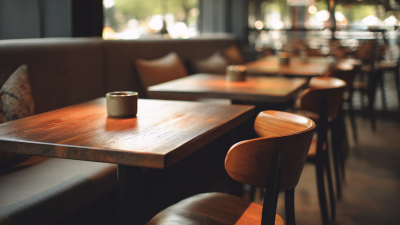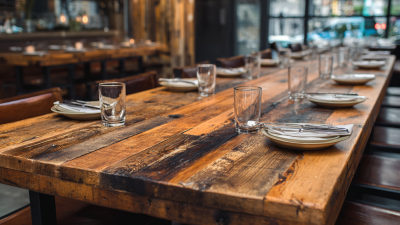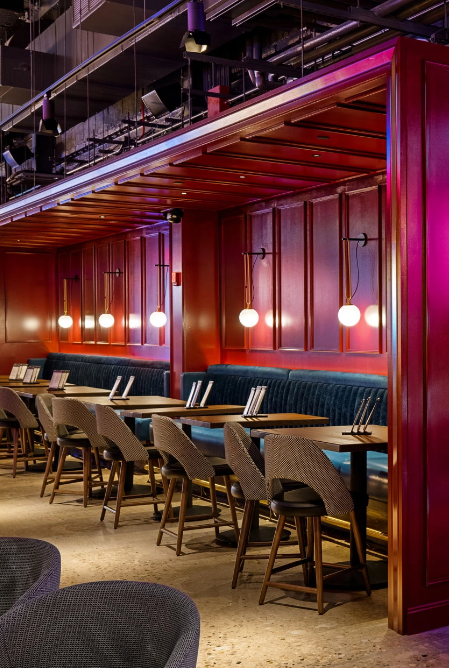

Choosing Restaurant Furniture Design in 2026 requires more than matching tables to wall colors. It requires evidence, observation, and careful judgment. The National Restaurant Association’s 2025 State of the Restaurant Industry Report projected $1.5 trillion in U.S. restaurant sales. It also identified labor pressure, value expectations, and technology investment as continuing business concerns. These forces affect furniture choices directly. Operators need durable chairs, flexible layouts, and surfaces that support faster cleaning. Beautiful furniture alone cannot protect a weak operating model.
Design must also respond to changing dining behavior. Euromonitor International’s 2025 consumer foodservice analysis emphasizes experience, convenience, and evolving customer expectations. Meanwhile, hospitality designer Adam Tihany has described a restaurant as “a theater.” His view encourages designers to treat seating, lighting, circulation, and materials as part of the performance. A curved banquette can slow a guest’s movement and create intimacy. Stackable chairs can open floor space for events. Acoustic upholstery may reduce the sharp noise of plates and conversations.
Small details matter.
The strongest Restaurant Furniture Design balances emotion with measurable performance. Consider seat height, table spacing, cleaning time, replacement cost, and accessibility. Do not trust fashion too quickly. A trendy boucle chair may photograph well, yet perform poorly beside spilled sauces and constant use. That is the uncomfortable part. Some design decisions will be wrong after opening day. Regular staff feedback, maintenance records, and customer observations should guide revisions. This 2026 approach is practical, human, and slightly unfinished. That may be its greatest strength.
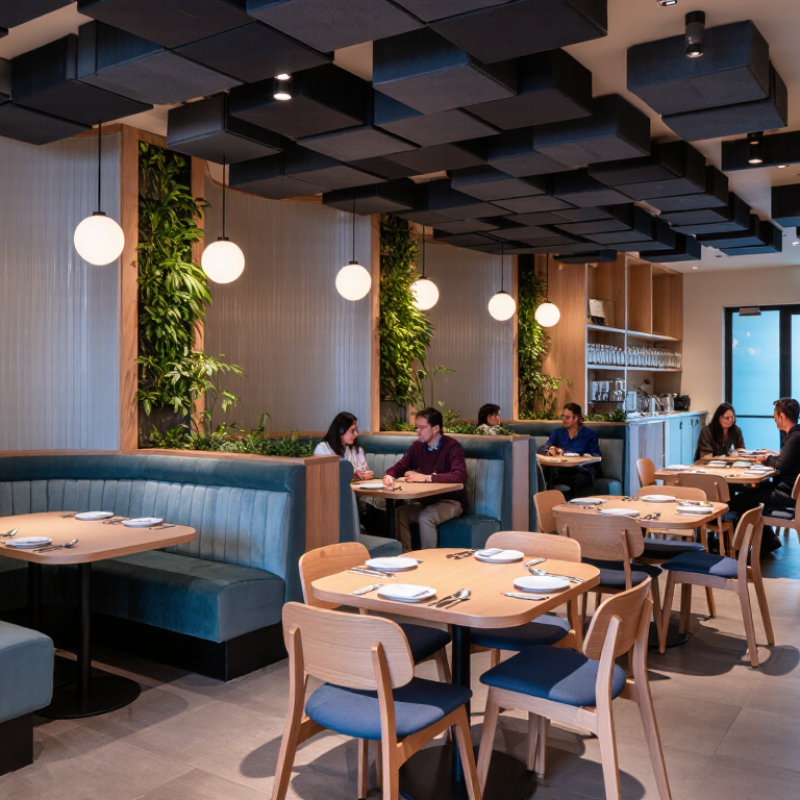
Choosing restaurant furniture in 2026 starts with the restaurant’s concept, audience, and service style. Furniture should express the dining experience before guests read the menu. A coastal café may need light finishes, relaxed chairs, and compact tables. A formal dining room requires stronger visual rhythm and generous spacing. The furniture should make the promise visible. Keep it honest.
During site visits, I study how guests enter, sit, eat, and leave. Seat height, table spacing, and back support affect comfort more than decoration. Families often need durable surfaces and flexible seating. Young professionals may prefer shared tables, charging access, and softer lounge areas. Older guests frequently value stable chairs and easy movement. Do not rely on assumptions alone. Watch how real people move through the room.
Service style adds another practical test. Table-service restaurants need clear paths for servers carrying plates and hot drinks. Counter-service spaces can use lighter furniture for faster cleaning and rearrangement. A busy room needs resilience. I sometimes favor attractive materials too quickly, then notice scratches after one crowded evening. That choice can be wrong. Test sample furniture with staff before ordering. Record complaints, cleaning time, and guest behavior. A chair that looks perfect may still slow service or discourage longer visits.
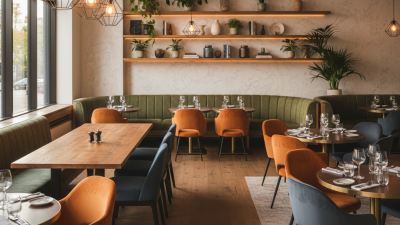
Furniture should match the restaurant’s daily work, not only its visual theme. The National Restaurant Association’s 2024 State of the Restaurant Industry Report projects $1 trillion in U.S. restaurant sales and 15.7 million jobs. That scale demands durable, repairable choices. In a busy dining room, powder-coated steel handles repeated cleaning better than delicate finishes. Solid-surface tabletops resist moisture, heat, and frequent spills. Still, “durable” does not mean uncomfortable.
Form controls movement. Narrow two-top tables help servers pass through compact dining areas. Round tables soften conversation and reduce sharp corner impacts. Banquettes can increase seating density, but fixed seating may slow cleaning and limit future rearrangement. Leave enough clearance for a tray, a stroller, and a person carrying hot dishes. Measure real service paths, not just the floor plan.
Material selection also affects labor. The U.S. Bureau of Labor Statistics reported more than 15 million food-service-related jobs in 2024, making efficient cleaning and maintenance practical priorities. Choose sealed wood, washable upholstery, and replaceable components where contact is frequent. Avoid porous textures near beverage stations. They look attractive, briefly. I would test every chair for wobble, noise, and long-shift comfort before ordering. A beautiful seat that causes fatigue can quietly damage the guest experience.
How to Choose Restaurant Furniture Design in 2026?
Plan Layout, Seating Capacity, Comfort, and Accessibility
Restaurant furniture should support movement before it follows a visual trend. Start with a scaled floor plan, not a catalog image. Mark entrances, service stations, restrooms, windows, and emergency routes. Then test table spacing with staff carrying full trays. A 90-centimeter aisle may look generous on paper, but busy service can make it feel narrow. I learned this after watching servers turn sideways near a corner booth.
Estimate seating capacity from usable floor area, not the entire room. Mix two-person tables with flexible four-person tables. Movable pieces can handle quiet lunches and crowded evenings. Avoid filling every gap with chairs. Guests notice cramped knees quickly. Comfort sells another course.
Choose seats with supportive backs, stable legs, and surfaces that tolerate daily cleaning. Check table height against the chosen chairs, especially for older guests and children. Accessibility requires more than one wide entrance. Provide clear routes, suitable table heights, and spaces for mobility devices without treating them as leftover areas. Follow current local accessibility requirements and consult a qualified professional before construction. My own preference for dense seating has sometimes reduced comfort, so I now review the plan with staff and people who use mobility aids. Their feedback is less polished, but more useful. Small details matter.
Use these dimensional benchmarks when arranging tables, chairs, and circulation paths. A 36-inch accessible route supports wheelchair movement, while a 60-inch turning space allows a wheelchair to make a full turn. Accessible dining surfaces should provide a clear floor space of at least 30 by 48 inches, with a surface height between 28 and 34 inches.
Sources: 2010 ADA Standards for Accessible Design, Sections 305, 308, 402, and 902. Dimensions are shown in inches and should be coordinated with local building codes, fire regulations, and the final seating plan.
How to Choose Restaurant Furniture Design in 2026?
Evaluate Durability, Maintenance, Sustainability, and Safety
Restaurant furniture must survive constant movement, spills, heat, and hurried cleaning. Choose sturdy frames, reinforced joints, and commercial-grade surfaces for busy dining rooms. Test each chair for wobble before purchasing. Small weaknesses become expensive problems.
Maintenance matters every day. Select finishes that resist stains but remain easy to repair. Rounded edges reduce trapped crumbs and simplify cleaning. Avoid delicate fabrics in high-spill areas. My own mistake was choosing attractive textured upholstery without testing sauce stains. It looked excellent at first. It became difficult to maintain.
Sustainability requires more than using recycled materials. Ask about timber sources, repair options, packaging, and expected service life. Furniture that lasts ten years may create less waste than cheaper furniture replaced repeatedly. Safety also deserves practical attention. Check stability, fire performance, smooth edges, weight limits, and appropriate spacing. Confirm requirements with qualified local professionals and current regulations. Design standards can change.
Tips: Create a trial dining area before ordering in volume. Place chairs beside tables, clean spills, and observe staff movement during a busy service simulation. Record damage, cleaning time, and discomfort. Talk with employees, not only designers. Their experience often reveals problems missed in showroom conditions. Leave room for reflection. The best choice may not be the most fashionable one.
| Furniture option | Typical commercial service life* | Durability and load performance | Maintenance requirement | Sustainability profile | Key safety considerations | Overall suitability score (1–5) |
|---|---|---|---|---|---|---|
| Hardwood seating and tables | 8–15 years | Good impact resistance and strong structural performance when properly joined and sealed. | Daily wiping; periodic resealing or refinishing; protect from prolonged standing water. | Renewable material; favor responsibly sourced wood, water-based finishes, repairable joints, and replaceable components. | Round exposed corners, stable bases, non-slip feet, and low-emission finishes are recommended. | 5 |
| High-pressure laminate over engineered wood | 5–10 years | Good scratch and stain resistance; edges and joints are vulnerable to water intrusion. | Routine cleaning with a damp cloth and mild detergent; repair chipped edges promptly. | Efficient use of wood fiber; select recycled-content panels and designs that allow top or edge replacement. | Use sealed edges, formaldehyde-compliant panels, stable frames, and rounded corners in high-traffic areas. | 4 |
| Powder-coated steel frames | 10–20 years | Very good structural strength and resistance to frequent movement; coating damage can expose metal to corrosion. | Wipe regularly; inspect welds, fasteners, and coating damage; keep joints dry. | Steel is highly recyclable; long service life and bolted construction improve repair and end-of-life recovery. | Specify stable geometry, protected edges, concealed or capped fasteners, and no sharp protrusions. | 5 |
| Solid-surface or compact laminate tops | 8–15 years | Strong resistance to stains, moisture, and routine commercial use; severe impact may cause chips or cracks. | Daily cleaning; minor surface damage may be sanded or professionally repaired, depending on material. | Long life and repairability can reduce replacement waste; select recycled content and low-waste fabrication. | Use slip-resistant flooring interfaces, rounded edges, stable supports, and heat protection where hot dishes are served. | 4 |
| Commercial upholstered seating | 5–10 years | Comfortable and durable when using contract-grade fabric, reinforced seams, and replaceable cushions. | Vacuum regularly; clean spills immediately; schedule periodic professional cleaning; replace covers when worn. | Prefer recycled or solution-dyed textiles, replaceable covers, recycled foam where suitable, and recyclable frames. | Specify low-flammability upholstery where required, secure mounting, rounded frames, and adequate aisle clearance. | 4 |
| Recycled or recyclable plastic seating | 5–12 years | Resistant to moisture and many food spills; quality varies with UV exposure, temperature, and formulation. | Simple daily washing; avoid abrasive cleaners and inspect for cracking or deformation. | Can contain post-consumer recycled polymer; choose mono-material designs and clearly identified recycling routes. | Confirm flame performance where applicable; select stable, tip-resistant bases and avoid brittle surfaces. | 3 |
| Outdoor aluminum furniture | 8–15 years | Lightweight and corrosion-resistant; can dent or move in strong wind if not weighted or anchored. | Wash periodically; inspect fasteners and surface coating; store or secure during severe weather. | Aluminum is widely recyclable; recycled content and durable powder coating can reduce lifecycle impact. | Use anti-tip solutions, rounded profiles, UV-resistant finishes, and slip-resistant feet on smooth surfaces. | 4 |
Furniture planning in 2026 should begin with budget, not fashion. The National Restaurant Association’s 2024 State of the Restaurant Industry projected restaurant sales above $1 trillion in the United States. That scale hides tight margins. Set a furniture budget by seat, then reserve money for delivery, installation, and replacements. A cheaper chair can become expensive after repeated repairs.
Branding should appear through proportion, color, and texture. A neighborhood café may use warm timber tones, compact tables, and visible joinery. A premium dining room may need deeper seats, quieter glides, and stronger visual spacing. According to the National Restaurant Association’s 2024 report, 94% of operators identified recruiting or retaining employees as a significant challenge. Staff comfort matters, too. Choose manageable table weights, stable bases, and easy-clean surfaces. Pretty furniture that slows service is a design failure.
2026 trends point toward flexible layouts, tactile materials, and lower-impact specifications. The 2024 Global Wellness Economy Monitor valued the global wellness economy at $6.3 trillion in 2023, supporting demand for calmer, more comfortable dining environments. Still, “wellness” should not mean oversized lounge seating everywhere. Test a full table setting before ordering. I would also question fashionable pale fabrics; they may photograph beautifully but show stains quickly. Request durability data, repair options, and material documentation from suppliers. Trends change. Operating costs remain.
©2024 Pine Vista LLC, DBA Design Manufacturing Group. All Rights Reserved.


©2024 Pine Vista LLC, DBA Design Manufacturing Group. All Rights Reserved.