

Choosing the right Mens Rain Coat in 2026 is less about chasing the newest label and more about matching real weather to real routines. Outdoor writer and fellwalker Alfred Wainwright is often quoted as saying, “There’s no such thing as bad weather, only unsuitable clothing.” That idea is useful when comparing coats, though no single design suits every commute, climate, or body shape.
Start with the conditions you face most. A light shower on a city walk calls for different protection than hours of wind-driven rain on an exposed trail. Check the garment’s waterproof construction, sealed seams, hood adjustment, and ventilation. Then picture wearing it over your usual layers. Can you reach a phone in the pocket? Does the hood stay put when you turn your head? Small details matter. So does weight.
Fabric labels can help, but they do not tell the whole story. A very waterproof coat may feel clammy during a fast walk, while a breathable shell may need careful care to keep performing well. Fit matters. Try moving your arms, sitting down, and tightening the cuffs. A coat that looks sharp on a hanger can still bind at the shoulders.
This guide will compare materials, weather protection, comfort, durability, and value to help you choose with clearer expectations. It will also leave room for doubt: product claims are not the same as years of wear. Your best Mens Rain Coat should protect you, feel practical, and suit the weather you actually meet.
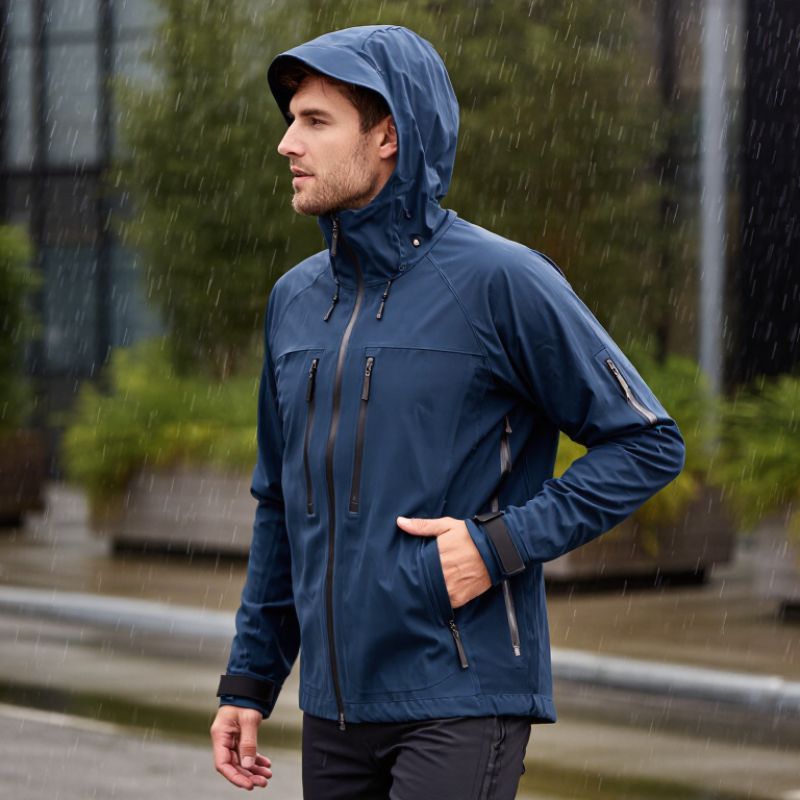
For a daily commute, choose a coat that handles short showers and fits comfortably over work clothes. A lighter, water-resistant shell may be enough if you can reach shelter quickly. Check the hood while walking: it should stay secure without blocking your side vision. Long cuffs and a two-way zipper can help keep wind and road spray out. A coat that feels great in a shop may feel restrictive on a crowded train.
Hiking calls for a different balance. Look for a breathable shell, adjustable cuffs, and a hood that moves with your head. You may want room for a warm layer underneath, but excess fabric can snag on pack straps. For hours of steady rain, prioritize fully taped seams and a reliable waterproof construction, not just a high collar or thick fabric. Even then, sweat can build up during steep climbs. No jacket solves every comfort problem.
Tips: Match the coat to your wettest likely day, not only the forecast average. Try it on with your usual bag, then reach forward and raise your arms. Check the care label, too; neglected coatings can lose performance. One easy mistake is buying extra warmth instead of useful ventilation.

A men’s raincoat’s waterproof rating is useful, but only when you know how it was measured. ISO 811:2018 specifies a hydrostatic-pressure test: water pressure rises against fabric until droplets pass through. Results are commonly expressed in millimetres of water column. A 10,000 mm result represents pressure equivalent to a 10-metre column of water, not a promise that a coat can be submerged to that depth.
Treat 10,000 mm as a practical comparison point, not an official ISO pass mark. ISO 811 defines a test method; it does not declare one rating suitable for every coat. AATCC TM127 also measures water resistance using hydrostatic pressure, but results are meaningful only when test conditions and fabric construction are comparable. Ask whether the figure applies to the finished garment or just a fabric sample. Seams, zippers, and wear can change real-world performance.
For daily commutes in steady rain, 10,000 mm can be a sensible target, especially with sealed seams and a storm flap over the front zipper. For a short walk, that number may be more than you need. For hours outdoors, breathability and garment condition matter too. Check how the coat handles pressure at the shoulders beneath backpack straps. Small detail. Ratings still leave room for doubt: one lab result cannot fully recreate a windy downpour.
| Rain Coat Type | Typical Hydrostatic-Head Buying Band | What the ISO 811 Result Tells You | Construction Checks | Best Suited For |
|---|---|---|---|---|
| Lightweight shower shell | About 5,000–10,000 mm | A lower-to-mid water-pressure result can suit short showers and light use. Around 10,000 mm is a useful comparison benchmark, not a guarantee of performance in every storm. | Check that the hood adjusts securely and that the front closure has a storm flap or water-resistant design. | Commuting, travel, and occasional light rain where low weight and packability matter. |
| Everyday all-weather shell | About 10,000–15,000 mm | A result at or above 10,000 mm offers a stronger fabric-level comparison for regular rain exposure. The test does not by itself establish that the finished coat is fully waterproof. | Look for sealed seams, adjustable cuffs, a well-covered zipper, and a hood that stays in place. | Daily use, walking, and changeable weather with periods of steady rain. |
| Hiking and extended-outdoor shell | About 15,000–20,000 mm | Higher hydrostatic-head values indicate greater resistance to water pressure in the tested fabric sample. Fit, wear, and garment construction still affect real-world protection. | Prefer fully taped seams, a hem adjustment, a protective hood brim, and durable high-wear areas. | Long walks, hiking, and sustained outdoor activity in wet conditions. |
| Heavy-rain or severe-weather shell | 20,000 mm and above | A high result is a useful sign of fabric resistance under the test conditions; it is not a substitute for checking the complete garment's design and care requirements. | Check for fully sealed seams, protected closures, adjustable openings, and a hood designed to shed rain. | Frequent heavy rain and demanding outdoor use when paired with suitable layering. |
| Any coat claiming waterproof protection | Ask for the reported value and test method | ISO 811 determines resistance to water penetration by applying hydrostatic pressure to a fabric specimen. Results should be compared only when the test method and reporting conditions are comparable. | Confirm whether seams are fully taped or only critically taped; inspect zippers, pockets, cuffs, hood, and care instructions. | Shoppers comparing specifications rather than relying on labels such as “waterproof” alone. |
How to use the 10,000 mm benchmark: It is a practical comparison point, not a universal ISO 811 pass/fail threshold. Hydrostatic-head figures describe tested fabric samples; seams, closures, garment wear, fit, and maintenance also influence how well a rain coat performs.
A breathable raincoat can feel different from one that merely blocks rain. EN 343:2019 sets Class 4 breathability at RET ≤15 m²·Pa/W, with lower RET indicating less resistance to water-vapour transfer. The standard’s figure is useful when comparing test results, but it is not a promise that every wearer will stay dry inside. On a brisk walk, a coat may feel comfortable; on a crowded train, heat can build quickly.
Check how the RET value was measured. ISO 11092:2014 describes the sweating guarded-hotplate method, which measures a material’s water-vapour resistance under controlled conditions. Ask whether the result applies to the fabric or the finished garment: seams, linings, and multiple layers can change how a coat feels. Look for a published test result, not just “breathable” on a product label. Small details matter. A vent under the arms can release heat, while a tight cuff may trap it. Fit matters, too; a thick sweater underneath can make a high-performing shell feel clammy. Class 4 is a strong benchmark, not a perfect forecast of comfort. Even careful buyers can overvalue one number.
A men’s rain coat can look sturdy yet leak at the shoulders. Inspect taped or welded seams, especially around the hood, shoulders, and front zipper. Tiny stitch holes matter in steady rain. Check the inside, too: seam tape should lie flat, without lifting edges or stiff, cracked patches. The EN 343:2019 standard grades protective clothing across four classes for water penetration and breathability. Use those ratings to compare tested performance, not just a “waterproof” label. Check the product’s stated test results; the standard alone does not certify every coat.
Fit affects protection. Pull the hood forward and turn your head: it should stay put without blocking your view. A firm brim helps keep water off glasses, while adjusters should work with cold fingers. Try the coat over a sweater or mid-layer, then reach overhead. Tight shoulders can pull seams apart; excess room can let wind and rain enter. The Outdoor Industry Association’s 2024 report estimated that 175.8 million Americans participated in outdoor recreation in 2023, a reminder that coats may face varied conditions. Still, no rating predicts every storm. One trade-off is worth accepting: a roomier hood may feel less precise, but it can fit over a warm hat. Check that choice in person.
Construction inspection points by feature
How to use this checklist: Check that seams are sealed, especially at exposed joins; the hood adjusts securely and gives useful face coverage; and the coat allows room for the layers you expect to wear. Each bar counts the inspection points listed for that feature. These are checklist counts, not product test scores.
A raincoat’s real cost appears after the first wet season. Check the care label before buying: frequent specialist cleaning can make a modest price feel expensive. Look for washable fabric, replaceable drawcords, and seams that can be resealed. After a rainy commute, hang the coat open and let it dry fully; storing it damp can encourage odors and weaken finishes. Small habits matter.
Repairs matter, too. Ask whether a torn lining, broken zipper, or peeling seam tape can be fixed, and whether repair instructions or spare parts are available. Read the warranty closely. Note its length, exclusions, and whether normal wear is treated differently from a manufacturing defect. Keep the receipt.
WRAP’s Valuing Our Clothes report estimates that extending a garment’s active life by nine months can cut its carbon, water, and waste footprints by 20–30%; the estimate covers clothing generally, not raincoats alone. McKinsey and Global Fashion Agenda’s Fashion on Climate report estimated that fashion produced about 2.1 billion tonnes of greenhouse-gas emissions in 2018. That wider impact is easy to forget when comparing jacket prices.
I still check the cuffs and hood adjustment before deciding. Not glamorous, but useful. A warranty is no promise of a long life; it is one detail to weigh alongside care and repair options.
©2024 Pine Vista LLC, DBA Design Manufacturing Group. All Rights Reserved.


©2024 Pine Vista LLC, DBA Design Manufacturing Group. All Rights Reserved.
