How to Choose the Best Rainfall Shower Head?
A rainfall shower can feel like standing beneath a warm, steady summer downpour. The right model, though, depends on more than its size or polished finish. Shower Head Rainfall options vary in spray pattern, water demand, installation style, and how well they work with existing plumbing. A broad overhead plate may look inviting, but it can disappoint if household flow is limited. Small details matter.
Richard Trethewey is a recognized plumbing and heating expert. However, I can’t verify a statement from him specifically about choosing a rainfall shower head, so I won’t attribute invented words to him. That distinction matters. A trustworthy buying guide should separate documented expert advice from practical editorial guidance.
For this guide, keep one useful rule in mind: “Choose the shower experience your water system can actually deliver.” Check the product’s flow requirements, measure your shower space, and consider whether you need a ceiling arm or wall-mounted fixture. Then think about everyday comfort: Does the spray reach your shoulders? Is the face easy to clean? Can you adjust the angle without bumping into a shelf? There is no perfect model for every bathroom. Even a stylish head can feel underwhelming when pressure, height, or spray coverage is wrong. Begin with the bathroom you have, not the showroom fantasy.
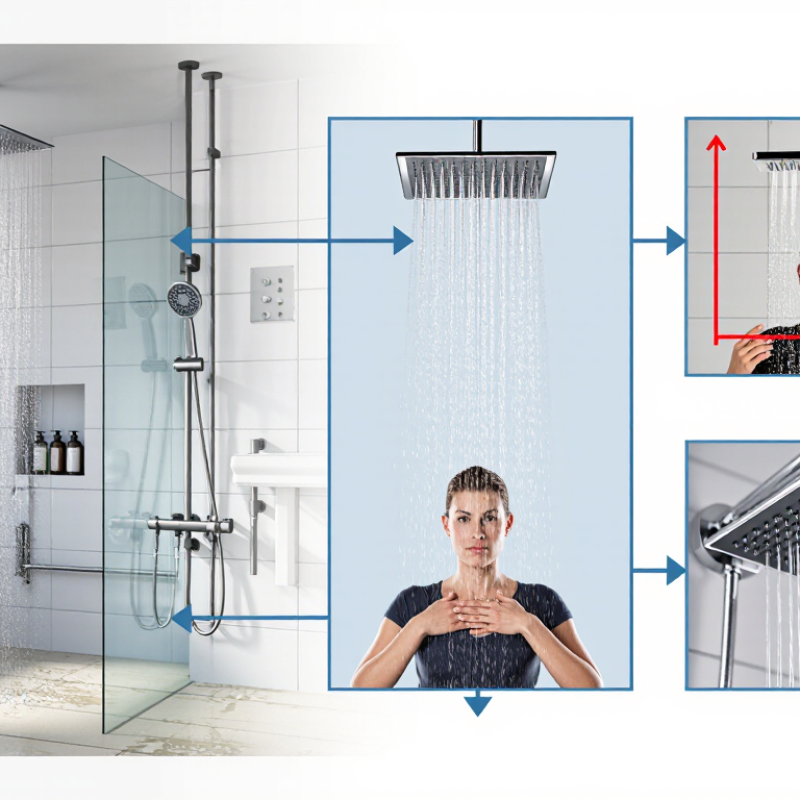
Identify Your Showering Needs and Preferred Rainfall Experience
How to Choose the Best Rainfall Shower Head?
Identify Your Showering Needs and Preferred Rainfall Experience
A rainfall shower should suit your routine, not just look calm in a photograph. Think about whether you shower to rinse quickly, unwind after work, or wash thick hair. A wide overhead spray can cover your shoulders evenly, but it may feel too gentle if you prefer a concentrated stream. Try to picture the sensation you want. Soft and steady?
Your bathroom matters as much as your preference. Measure the distance between the shower arm and your head, and check that the spray will not hit a wall or curtain. Taller users may appreciate a higher outlet; shorter users may find a very large head awkward to adjust around. If household water pressure is modest, ask a qualified installer whether the chosen head can deliver a satisfying spray with your plumbing. Bigger is not always better.
Consider who shares the shower and how it is used. A handheld option can help rinse children, clean the enclosure, or target shampoo, while a fixed rainfall head offers a simpler, open feel. Note whether you often need a fast rinse; a broad spray may take longer to rinse dense hair. Preferences can change, too. I wouldn’t choose from photos alone: spray angle, sound, and warmth can feel different in your own space. If possible, compare a sample in person or check the return and installation details before deciding.
Compare Showerhead Size, Spray Patterns, and Water Coverage
A rainfall showerhead’s diameter shapes the feel of the spray, but a larger face does not guarantee better coverage. An 8-inch head may suit a compact shower, while a 10- or 12-inch model can spread water across more of the body. Check the shower arm’s reach, too. A wide head mounted close to the wall may leave you standing partly outside its spray. Measure your shower space before choosing.
Spray patterns affect comfort as much as size. A broad, gentle rain setting feels calm, while concentrated jets can rinse shampoo more quickly. Some heads offer both, though extra settings matter little if you rarely use them. Water pressure also changes the result: a large faceplate may feel weak when the supply is limited. Not always obvious. Compare coverage at your usual pressure, and look for clear flow and installation details. A slightly smaller head with even spray can work better than a wide one that leaves dry patches near your shoulders. I would not judge coverage from a product photo alone; the angle and room setup can make it look more generous than it is.
Check Plumbing Compatibility, Mounting Options, and Installation Requirements
How to Choose the Best Rainfall Shower Head?
Before choosing a rainfall shower head, check the plumbing behind it. Most existing shower arms use a 1/2-inch connection, but confirm the thread size and inspect for corrosion. A ceiling-mounted head may need a new pipe route, access above the ceiling, and extra support. Measure the shower area, too. A wide head can splash beyond a small enclosure.
Mounting changes the installation. A wall arm is often simpler to fit, while a ceiling arm places the head directly overhead. Check its reach against the ceiling height and your standing position. Also consider water pressure: a larger head does not create more pressure, and a weak flow can feel underwhelming. The U.S. EPA says WaterSense-labeled showerheads use no more than 2.0 gallons per minute, compared with 2.5 gallons per minute for standard models, while using at least 20% less water. Check the product’s flow rating and your home’s actual supply.
Tips: Run the shower and note the flow before buying. Verify the fittings, measure overhead clearance, and follow the maker’s installation instructions. If the pipe is loose or the ceiling needs opening, ask a qualified plumber. I once overlooked the enclosure width; water reached the floor. Small details matter.
Evaluate Materials, Maintenance Needs, and Long-Term Durability
A rainfall shower head is used every day, so its finish and internal materials matter as much as its appearance. Stainless steel and solid brass generally offer sturdy construction, while quality-engineered plastic can be lighter and less costly. Compare the full product specifications rather than judging by a shiny surface. A thin decorative coating may show scratches or discoloration sooner, especially in a busy bathroom. Small details matter. Check that the spray face has flexible silicone nozzles, which are easier to wipe when mineral deposits collect.
Maintenance depends on your water and bathroom habits. In hard-water areas, white scale can build around the nozzles and reduce spray consistency. Wipe the face with a soft cloth, and follow the maker’s cleaning instructions; harsh abrasives may damage the finish. Not always. A wide head can be harder to clean if it sits high or has many tight corners. Consider whether you can reach it safely and whether replacement parts, seals, and standard connections are available. These practical checks help estimate long-term durability, though real lifespan also depends on installation and water quality.
Balance Water Efficiency, Features, and Overall Cost
A rainfall shower head should feel spacious without wasting water. Check its flow rate, usually listed in gallons per minute, before comparing finishes or spray patterns. A lower-flow model can reduce water use, but performance depends on your home’s pressure and plumbing. If possible, test the spray in a showroom or read measurements from a reliable product specification. A broad plate may look generous, yet weak pressure can make the experience disappointing.
Features affect both comfort and upkeep. Adjustable spray settings are useful if different people share the shower, while easy-clean nozzles help limit mineral buildup. Simple is often better. Extra controls can add cost and create more parts to maintain. Also measure the shower space: a large head may splash beyond a narrow enclosure. I once underestimated that detail, and the bath mat paid for it.
Compare the full cost, not just the purchase price. Include any compatible arm, plumber’s labor, and possible valve changes if your setup cannot support the chosen head. A basic model with a sensible flow rate may offer better value than one loaded with features you rarely use. Still, the cheapest option is not always the least expensive over time; poor materials or difficult cleaning can shorten its useful life. Check the warranty terms and replacement-part availability before deciding.