

Konjac has a persuasive place in keto cooking: it can turn into translucent noodles, rice-shaped pieces, or a thickening ingredient, while contributing very little digestible carbohydrate in many prepared products. That makes the Konjac Keto Diet appealing to people watching daily carbohydrate intake. But the ingredient’s reputation can outrun the evidence. Konjac contains glucomannan, a soluble fiber; it is not a fat-burning shortcut, and it does not make a meal keto by itself. A creamy sauce or sweetened topping can still add substantial carbohydrates.
The details matter. The U.S. Food and Drug Administration’s Nutrition Facts rules list total carbohydrate and dietary fiber separately, while “net carbs” is not a standardized value on the label. So compare the serving size, total carbohydrate, and fiber on the actual package. USDA FoodData Central can help with basic food composition, but packaged konjac products vary by formulation. That difference is easy to miss.
There is also a useful reality check. The European Food Safety Authority evaluated glucomannan claims under specific intake and dietary conditions; that assessment does not prove konjac noodles improve ketosis or deliver weight loss on their own. For a practical meal, check the label, rinse the noodles if directed, and taste them before adding sauce. Texture can be unusual. Start small, especially if you are not used to extra fiber, and drink enough fluid. Good keto planning is less about a miracle ingredient and more about the whole plate.
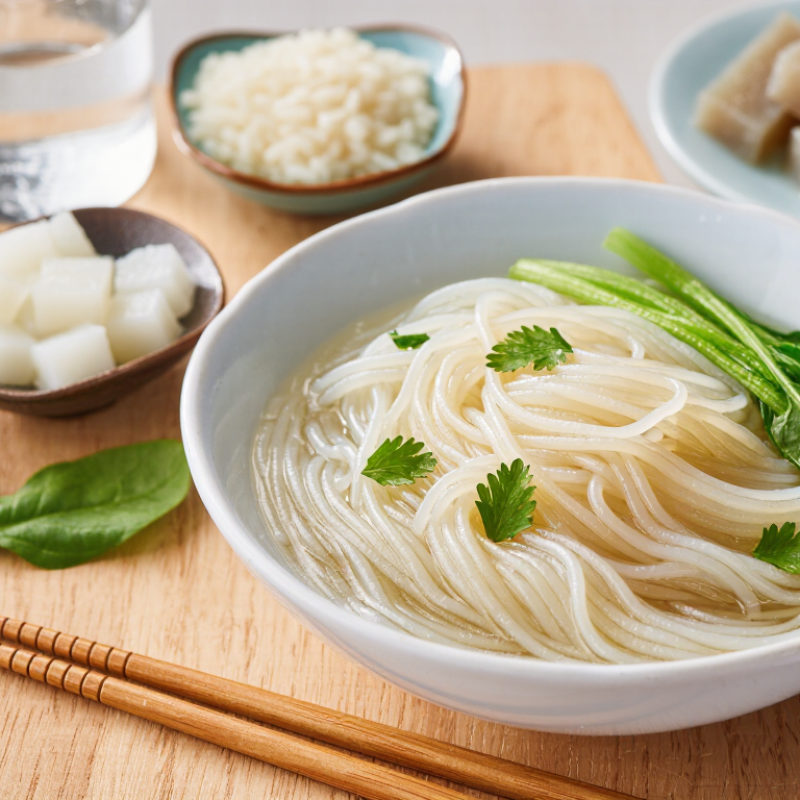
Konjac comes from the corm of Amorphophallus konjac, a plant grown in parts of Asia. Its main soluble fiber, glucomannan, absorbs water and forms a thick gel. Food makers use it to create springy shirataki noodles and rice-shaped pieces, and as a thickener in some products. The texture is distinctive—almost slippery—and may take getting used to. Konjac itself is not a magic keto food; check the nutrition label, since ingredients and carbohydrate counts vary.
In a keto kitchen, drained konjac noodles can replace wheat noodles in soups or stir-fries. Rinse them well, then briefly dry-fry to reduce excess moisture before adding sauce. A European Food Safety Authority scientific assessment found that glucomannan’s approved weight-loss claim applies to 3 grams daily, taken in divided doses with water and alongside an energy-restricted diet. That finding is not proof that konjac causes ketosis or works the same way for everyone. Fiber tolerance also varies.
Tips: Check total carbohydrates and fiber per serving, and follow the package’s preparation directions. Start with a modest portion if you are not used to glucomannan. It can be easy to overestimate how filling a low-calorie noodle will be; add protein and vegetables for a more balanced meal.

Konjac is low in net carbohydrates because its main component, glucomannan, is a soluble dietary fiber. The body does not digest this fiber into glucose in the same way it digests starch or sugar. So, when people estimate net carbs by subtracting fiber from total carbohydrates, konjac often contributes very little. The exact number depends on the product and serving size.
A bowl of konjac noodles may look substantial, yet contain few digestible carbohydrates. Check the ingredient list and nutrition panel, though. Some products include starches or other ingredients that change the carbohydrate count. Labeling rules can also vary, so “net carbs” may not appear as an official value.
A practical approach is to compare total carbohydrates and fiber per serving, then account for the amount actually eaten. Texture matters, too. Konjac noodles can be springy and slightly slippery, which takes getting used to. I still find them less satisfying on their own; pairing them with vegetables, protein, and a flavorful sauce makes a meal feel more complete.
Konjac can fit a keto diet because its main carbohydrate, glucomannan, is a soluble fiber that the body largely does not digest. Konjac noodles and rice are often low in digestible carbohydrates, but the exact amount depends on the product and serving size. Check the nutrition label rather than relying on the front of the package. That matters.
For a practical meal, rinse the noodles well, drain them, and warm them in a pan until excess water evaporates. Their mild taste and springy texture pair with eggs, tofu, meat, or low-carbohydrate vegetables. The sauce needs attention, too. Sweetened sauces can add enough carbohydrates to change how a meal fits your daily target.
Konjac is not a complete meal or a shortcut to ketosis. Keto plans differ, and individual carbohydrate limits vary, so count the serving as part of your overall intake. Some people find glucomannan filling; others experience bloating or discomfort, especially when they eat a large portion. Start with a modest amount and drink fluids. The texture can take getting used to, and honestly, it may not suit every dish.
Konjac shirataki noodles are typically very low in digestible carbohydrates, making them a low-carb alternative to wheat pasta.
Estimated net carbohydrates per 100 g, calculated as total carbohydrate minus dietary fiber: konjac shirataki noodles, about 0.5 g; zucchini noodles, about 2.1 g; cooked wheat spaghetti, about 29.1 g. Values are approximate and can vary by product and preparation.
Konjac can fit a keto diet because its main fiber, glucomannan, contributes little digestible carbohydrate. Shirataki noodles, made from konjac, can replace wheat noodles in soups or stir-fries. They feel springy and absorb the flavor of broth, garlic, or sesame oil. That can help. A filling bowl may make a lower-carb meal feel more substantial without adding many net carbs, though product labels and serving sizes vary.
Glucomannan absorbs water and forms a gel, which may increase fullness for some people. That could make it easier to manage appetite, but it is not a guaranteed weight-loss effect. The fiber may also support regular bowel movements when introduced gradually and taken with enough fluid. Go slowly. Too much can cause bloating, gas, or discomfort, especially if your usual diet is low in fiber. Konjac is not a meaningful source of protein or many micronutrients, so it works better alongside foods such as eggs, fish, tofu, or leafy greens. It is easy to mistake “low carb” for “complete meal”; the noodles alone rarely provide much nourishment.
| Dimension | What Konjac Offers | Potential Relevance on Keto | Practical Consideration |
|---|---|---|---|
| Carbohydrate profile | Konjac root products such as shirataki noodles are primarily made from water and glucomannan, a soluble fiber. Their nutrition varies by product and serving size. | Many plain konjac products are low in digestible carbohydrate and may fit into a low-carbohydrate meal plan. | Check the package label and serving size. Do not assume every konjac product has the same carbohydrate content. |
| Dietary fiber | Glucomannan is a water-soluble dietary fiber that absorbs water and forms a viscous gel. | It can add fiber to meals without contributing much digestible carbohydrate in many plain products. | Fiber amounts and net-carbohydrate calculations depend on the product and local labeling rules. |
| Meal volume and fullness | Prepared konjac noodles contain substantial water and can add volume to a dish. | They may help make a keto meal feel more substantial while keeping its carbohydrate content low. | Fullness responses vary. Pair them with a suitable protein source and other nutritious foods rather than relying on noodles alone. |
| Energy content | Plain konjac noodles are generally low in calories, though exact values vary by brand and preparation. | They can serve as a lower-calorie alternative to conventional wheat or rice noodles. | Sauces, oils, and toppings can substantially change the calories and carbohydrate content of the finished meal. |
| Meal variety | Konjac is available in noodle- and rice-style forms that can be used in many dishes. | It may make low-carbohydrate eating more flexible by replacing some higher-carbohydrate starches. | Rinse and prepare according to the package directions; texture and flavor differ from grain-based noodles. |
| Blood-glucose response | Soluble fiber can influence digestion and nutrient absorption, but the response depends on the whole meal and the individual. | Replacing a high-carbohydrate staple with a low-digestible-carbohydrate konjac product may reduce the carbohydrate load of that meal. | Konjac is not a treatment for diabetes. People using glucose-lowering medication should follow advice from their healthcare professional. |
| Digestive tolerance | Glucomannan can cause bloating, gas, or changes in bowel habits, especially when fiber intake increases quickly. | Gradual introduction may make it easier to assess whether konjac suits an individual keto eating pattern. | Drink adequate fluids and follow product directions. Stop use and seek medical advice if significant symptoms occur. |
| Safe use | Dry glucomannan expands when it absorbs water. | Prepared foods are generally easier to portion and use as part of a meal than dry fiber products. | Never swallow dry konjac fiber without sufficient liquid. Follow the label; people with swallowing difficulties should seek medical advice before use. |
Note: Konjac may be a useful low-carbohydrate food choice, but it does not induce ketosis or guarantee weight loss. Check nutrition labels, account for the full meal, and choose a varied diet that meets individual nutritional needs.
Konjac is rich in glucomannan, a soluble fiber with very little digestible carbohydrate. That can make it useful in some keto meals, but its fiber needs water. Dry konjac powder can swell quickly and may cause choking or blockage if swallowed without enough liquid. Take it only as directed, and avoid it if you have swallowing difficulties or a known narrowing of the digestive tract unless a clinician approves it. Small details matter.
A sudden increase in fiber may bring bloating, gas, loose stools, or constipation. Start with a modest amount and notice how your body responds; tolerance varies. Glucomannan may also affect how some medicines are absorbed. Ask a pharmacist or clinician about timing, especially if you take regular medication or manage blood sugar. Konjac noodles are not automatically keto-friendly: check the serving size and sauces, which may add carbohydrates. I’d be wary of assuming that “low carb” means suitable for everyone.
©2024 Pine Vista LLC, DBA Design Manufacturing Group. All Rights Reserved.


©2024 Pine Vista LLC, DBA Design Manufacturing Group. All Rights Reserved.
