

Choosing the right Car Shelter manufacturer or supplier requires more than comparing prices online. A reliable provider should understand local weather, vehicle sizes, installation conditions, and long-term maintenance needs. This guide examines companies that serve residential, commercial, agricultural, and temporary parking applications.
Experienced suppliers usually offer clear specifications for frame steel, fabric strength, drainage, anchoring, and corrosion protection. Look for practical details, such as galvanized tubing, reinforced seams, UV-resistant covers, and snow-load information. A strong product should not merely look attractive in a catalog. It should remain stable beside a driveway during heavy rain and seasonal wind.
Local support matters.
Manufacturers with documented testing, transparent warranties, and accessible replacement parts deserve closer attention. Installation guidance also reveals professional competence. Some suppliers provide engineering assistance, site assessments, or trained installers, while others only ship boxed materials. That difference can affect safety, cost, and service life.
This comparison will consider product quality, customization, manufacturing experience, delivery coverage, customer support, and overall value. However, no ranking fits every buyer. A supplier praised for residential shelters may not suit a fleet facility or a coastal location. Claims about durability should be checked against technical documents and independent customer feedback. Even this approach has limits; published information can become outdated, and reviews may not show every installation challenge. Careful buyers should request current specifications, confirm warranty terms, and discuss local conditions before ordering.
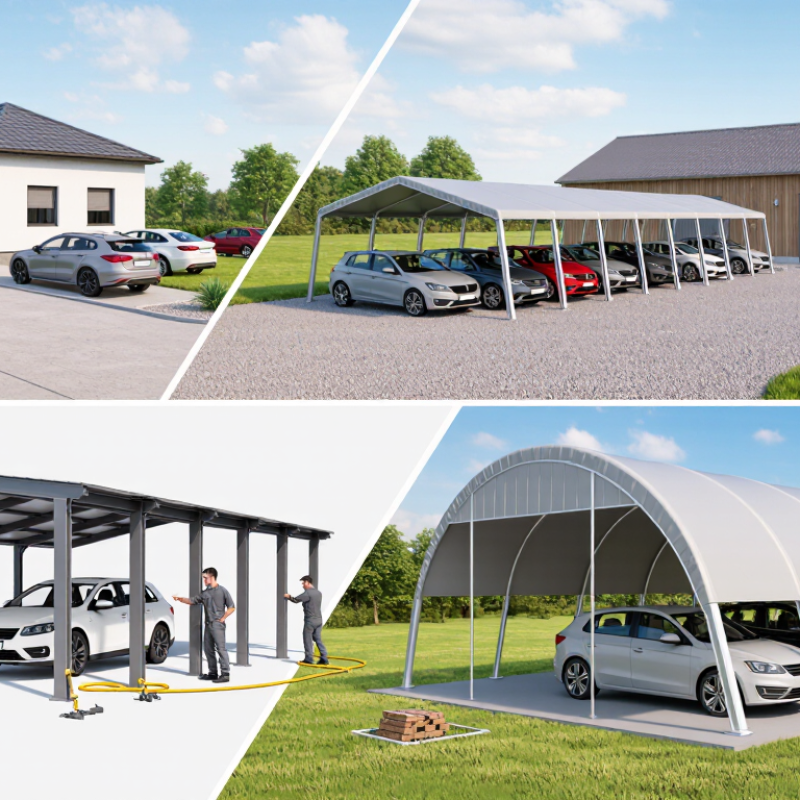
Car shelters vary by structure, materials, and intended use. Freestanding shelters work well in open driveways, apartment parking areas, and commercial lots. Wall-mounted designs save space beside homes or offices. Portable shelters use lightweight frames and tensioned covers, making them suitable for seasonal storage, events, and temporary parking. Each type creates different demands for installation and maintenance.
Steel-frame shelters offer strong support in areas exposed to wind, rain, or snow. Aluminum frames resist corrosion and remain easier to handle during installation. Fabric covers can reduce heat and protect paint from sunlight, but their performance depends on coating quality and tension. Polycarbonate panels provide more lasting weather protection, although they may require stronger foundations and careful drainage. Water pooling is a small detail with expensive consequences.
Experienced manufacturers and suppliers should provide clear load ratings, material specifications, installation drawings, and maintenance guidance. Ask how the structure handles local weather conditions, not only its visual appearance. Check anchoring methods, replacement-cover availability, and warranty terms before ordering. Site measurements should include vehicle height, door clearance, turning space, and ground slope. A shelter that fits one car may feel impractical beside a crowded walkway. This is where planning often falls short. Suppliers with documented testing and responsive technical support usually offer more dependable solutions, though even good specifications cannot replace a careful site inspection.
Evaluating car shelter manufacturers requires more than comparing prices. Grand View Research’s 2024 market analysis forecasts carport demand to grow above 5% annually. The International Energy Agency’s Renewables 2024 report also records over 500 gigawatts of new solar capacity in 2023. Solar-ready shelters need careful structural evaluation.
Request stamped engineering calculations, wind-load ratings, snow-load limits, and corrosion test results. Confirm the steel grade, coating thickness, drainage design, and connection hardware. A reliable supplier should provide drawings, installation tolerances, inspection records, and clear warranty terms. Ask how the structure performs after repeated freeze-thaw cycles. That detail matters.
Experience appears in the small decisions. Does the supplier adjust column spacing for fire lanes? Can the foundation design match weak soil or existing pavement? Does the installation team document torque readings and concrete strength? Industry standards help, but paperwork can still hide gaps. I would inspect a completed project, not only a factory sample. One overlooked issue is maintenance access. A shelter may look strong while making lighting, cleaning, or solar-panel repairs unnecessarily difficult. Get delivery schedules in writing, including replacement-part lead times. A low quotation may become expensive after redesigns, delays, and drainage failures.
Leading global car shelter manufacturers and suppliers are moving beyond simple weather covers. Buyers now expect engineered protection, fast installation, and dependable performance across different climates.
The International Energy Agency reported nearly 14 million electric car sales worldwide in 2023. Its 2024 outlook projected sales could reach about 17 million. This growth increases demand for shelters that support charging equipment and protect vehicles from heat, rain, and snow.
Engineering quality remains the main separator. Reliable suppliers specify galvanized steel or treated aluminum, UV-resistant membranes, and tested drainage systems. They should also provide wind-load and snow-load calculations for each installation region.
The International Energy Agency Photovoltaic Power Systems Programme recorded more than 400 gigawatts of new solar capacity in 2023. That figure helps explain the expanding interest in solar carports, especially at workplaces, transport hubs, and residential developments.
Details matter.
A strong supplier documents material thickness, coating performance, fastener quality, and maintenance intervals. Global projects also require clear drawings, replacement-part access, and installation guidance in local languages.
However, product claims are not always comparable. Some published durability figures come from controlled tests rather than harsh coastal or desert conditions. Buyers should question test methods, warranty exclusions, and actual project experience.
A shelter may look elegant in a catalog, yet perform poorly when drainage, foundations, or local permitting receive little attention. Careful evaluation remains essential, even when the supplier appears technically impressive.
Top Car Shelter Manufacturers and Suppliers? Materials, Design Features, and Customization Options
Material selection reveals a supplier’s technical competence. World Steel Association data shows global crude steel production reached about 1.89 billion metric tons in 2023. Steel remains practical for car shelters because it supports narrow columns, strong roof frames, and repeated vehicle loading. Galvanized coatings help resist rain and road salt. Aluminum reduces weight, but usually costs more and may need careful joint design. Polycarbonate roofing can admit daylight while softening glare. It can also become cloudy or scratched. That detail matters.
Experienced manufacturers should explain wind ratings, snow loads, drainage, and foundation requirements before quoting. A shelter with deeper footings may perform better on loose soil. Powder-coated frames offer color choices and surface protection, yet poor pretreatment can cause early peeling. Ask for coating thickness, fastener grades, and documented test results. Do not rely on attractive renderings alone.
Customization may include sloped roofs, enclosed side panels, lighting, access control, storage bays, and solar-ready structures. The IEA Photovoltaic Power Systems Programme reported global photovoltaic capacity exceeded 1.4 terawatts by the end of 2023. This supports growing demand for roofs prepared for solar panels, cable routes, and inverter space. However, adding panels increases dead load and wind exposure. A supplier should recalculate the structure, not simply enlarge the roof. That shortcut is tempting, but it deserves skepticism.
Selecting the right car shelter supplier starts with your site, not a glossy catalog. Measure vehicle length, turning space, ground slope, and snow or wind exposure. Ask whether the supplier has handled similar installations. Request drawings showing frame spacing, anchoring points, drainage, and fabric tension. Experienced suppliers explain trade-offs in plain language. They should identify limits instead of promising that one structure fits every driveway. Small details matter. A poorly placed post can block doors or reduce safe clearance.
Check material specifications carefully. Galvanized steel, UV-resistant fabric, corrosion protection, and tested load ratings affect service life. Ask for written maintenance instructions and a clear warranty. The warranty should state coverage, exclusions, response times, and replacement procedures. Verify installation training and local service capacity. A low quote may exclude ground preparation, delivery, or seasonal inspections. Get every cost in writing. Then compare suppliers by total ownership cost, not price alone. Ask for references from customers with similar weather conditions.
Reliability also appears in communication. Does the supplier answer technical questions consistently? Are revisions documented? If measurements change, will they correct the design before production? These questions reveal process quality. Be honest about your own uncertainty. You may not know the final parking layout yet. A dependable supplier should help you test options, rather than pressure you into a quick order. I would also review one installed shelter in person, if possible. Photos can hide uneven foundations, loose edges, or difficult access. Even strong research has gaps, so record assumptions and revisit them before signing.
| Supplier Type | Best Suited For | Common Structure | Typical Cover Materials | Indicative Service Life | Customization Level | Key Verification Points |
|---|---|---|---|---|---|---|
| Portable Shelter Supplier | Temporary parking, seasonal storage, events, and rental applications | Bolted or pin-connected steel tubing with removable anchors | Woven polyethylene or PVC-coated polyester fabric | Approximately 3–10 years for the cover, depending on fabric, UV exposure, and maintenance | Medium; size, doors, windows, and anchoring options are commonly available | Wind and snow ratings, anchor design, fabric weight, fire performance, replacement-cover availability |
| Permanent Carport Manufacturer | Residential driveways, commercial parking areas, and long-term vehicle protection | Galvanized or coated steel posts, beams, rafters, and roof panels | Metal roofing, aluminum panels, or engineered membrane systems | Commonly 15–30+ years for the structural frame when properly designed and maintained | High; roof pitch, bay width, drainage, lighting, and side panels may be configured | Local building-code compliance, foundation requirements, corrosion protection, drainage, engineering drawings |
| Fabric Membrane Structure Supplier | Large parking facilities, campuses, dealerships, and architectural projects | Engineered steel or aluminum frame with tensioned membrane roofing | PVC-coated polyester or PTFE-coated fiberglass membrane | Approximately 15–30 years for many architectural membrane systems, subject to specification and environment | Very high; curved roofs, linked bays, entrances, skylights, and custom layouts are available | Structural calculations, membrane warranty, fire classification, snow drift analysis, installation capability |
| Modular Parking Shelter Supplier | Multi-space projects requiring phased installation or future expansion | Repeatable steel or aluminum modules with shared columns and standardized bays | Metal roof panels, polycarbonate sheets, or tensioned fabric | Typically 15–30 years for the frame, depending on materials and exposure | High; bay count, end panels, lighting, solar-ready roofing, and accessibility layouts can be added | Module dimensions, expansion compatibility, column placement, permitting, delivery sequence, site installation |
| Vehicle Storage Building Supplier | Fleet storage, collector vehicles, equipment protection, and enclosed parking | Rigid steel frame with enclosed walls, doors, ventilation, and optional insulation | Metal siding, insulated panels, or fabric building envelope | Often 20–40+ years for the main frame when engineered and maintained correctly | Very high; security, insulation, ventilation, electrical systems, and service doors may be included | Occupancy classification, fire protection, ventilation, foundation design, access width, and permit responsibility |
Note: Service-life figures are indicative industry ranges. Actual performance depends on engineering, climate, ultraviolet exposure, corrosion conditions, installation quality, inspection, and maintenance.
©2024 Pine Vista LLC, DBA Design Manufacturing Group. All Rights Reserved.


©2024 Pine Vista LLC, DBA Design Manufacturing Group. All Rights Reserved.
