What Is a Polyester Carport Used For?
A Polyester Carport is a practical shelter for vehicles, outdoor equipment, and everyday storage. Most models pair a polyester canopy with a supporting frame, creating shade and a barrier against rain, dust, falling leaves, and bird droppings. The exact level of protection depends on the fabric coating, seams, frame, and installation. Check the product specifications rather than assuming every canopy is waterproof or offers the same UV resistance.
It can cover a car, motorcycle, bicycle, small boat, or garden tools beside a home, workshop, or campsite. For example, a properly sized shelter can keep a car’s seats cooler in direct sun and protect tools from a light shower. Handy, but not a garage. Wind matters. Secure the frame as instructed, keep the shelter on suitable ground, and avoid leaving standing water on the canopy. Polyester can wear, fade, or tear over time, especially when exposed to harsh weather or poor maintenance. A carport is also open-sided, so it offers less security and weather protection than an enclosed building. Think of it as a flexible layer of cover, not a permanent replacement for a garage. Its usefulness comes down to the space available, local conditions, and how often you need quick access to the items underneath. Even with a sturdy frame, regular checks are sensible. The fabric may need replacing before the structure does.
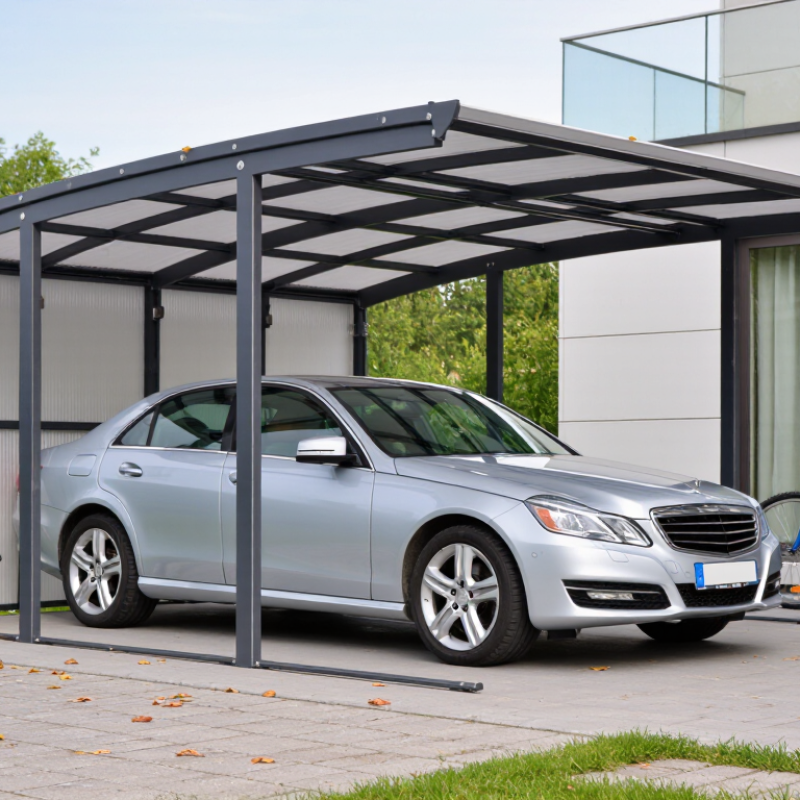
What a Polyester Carport Is and How Its Materials Work
A polyester carport is a covered parking area with a canopy made from polyester fabric. The fabric is usually stretched across a separate frame, often made of steel or aluminum. It provides shade and helps shield a vehicle from rain, leaves, bird droppings, and light debris. The canopy is lightweight; it does not support itself. That distinction matters.
Polyester fibers absorb little water, so the fabric can dry relatively quickly after a shower. Many canopies also have a surface coating, such as polyurethane or PVC, to improve water resistance and reduce sun damage. Coatings vary, and seams may be more vulnerable than the main panels. Check the care instructions and how the edges are finished. “Water-resistant” does not always mean fully waterproof.
For example, a polyester carport can keep a parked car cooler when the afternoon sun hits the roof, while still allowing air to move around the sides. It can also offer a practical covered spot for bicycles or garden equipment. No fabric canopy stays new forever. Dust, standing water, and strong wind can shorten its useful life, so regular checks and proper tension matter. I would not assume every polyester cover suits harsh weather; the fabric weight, coating, frame, and anchoring all affect performance.
What Is a Polyester Carport Used For? — What a Polyester Carport Is and How Its Materials Work
How to read this: Polyester carport covers use woven or knitted polyester fabric, often with a protective coating, to provide shade and shelter for vehicles and outdoor equipment. This chart compares the approximate densities of the base fibers—not finished canopy fabrics. Density alone does not determine a cover’s strength, weather resistance, or lifespan.
How Polyester Carports Shelter Vehicles from Weather
A polyester carport shelters a vehicle with a roof that blocks direct sun and sheds rain. On a hot afternoon, shade can keep the steering wheel and seats less exposed to sunlight, though it will not cool the cabin like air conditioning. A taut, coated canopy can help divert rain away from the roof and windows. Open sides allow airflow, but wind-driven rain may still reach the vehicle. That matters. NOAA’s 2023 disaster report recorded 28 U.S. weather and climate events, each causing at least $1 billion in damage. The figure shows the scale of weather losses; it does not measure carport performance. Polyester fabric varies in weave, coating, UV resistance, and water resistance, so check product test details rather than relying on the material name alone. AATCC TM16.3 provides a method for testing textile colorfastness to light, but a fabric test does not certify the whole structure. Secure anchors, sound joints, and suitable drainage also affect protection. In windy or snowy conditions, follow the structure’s stated limits and clear accumulated snow when advised. Fabric is not magic. Swiss Re Institute estimated global insured natural-catastrophe losses at $108 billion in 2023, another reminder that a lightweight shelter reduces exposure but cannot prevent every loss. I would still inspect seams and anchors after a hard storm; that small habit is easy to overlook.
Common Uses Beyond Everyday Vehicle Parking
What Is a Polyester Carport Used For?
Common Uses Beyond Everyday Vehicle Parking
A polyester carport can shelter more than a car. Its covered space can protect bicycles, garden tools, patio furniture, or bags of potting soil from direct sun and light rain. It can also serve as a shaded spot for outdoor projects, such as sanding a small table or sorting garden supplies. It is not a garage. Wind and blowing rain can still reach the sides.
For gatherings, the shelter can cover a few chairs, a serving table, or children’s craft materials. At home, it might become a seasonal work area or a place to keep firewood raised off damp ground. Just remember that polyester fabric varies. Coatings, seams, frame design, and anchoring all affect performance, so check the product’s stated limits instead of assuming every shelter handles the same weather.
Tips: Set it on level ground and secure every anchor as directed. Keep fabric clear of sharp edges, and let it dry before storage to reduce mildew risk. In strong winds or heavy snow, follow the manufacturer’s guidance; taking it down may be the sensible choice. It is easy to underestimate weather.
What Is a Polyester Carport Used For? — Common Uses Beyond Everyday Vehicle Parking
| Common Use | How the Shelter Is Used | Example Footprint | Practical Considerations |
| Outdoor workspace | Provides a covered area for tasks such as potting plants, assembling items, or light repair work. | About 10 × 10 ft (3 × 3 m) for a compact work area | Keep the sides open for airflow. Use suitable lighting and keep electrical equipment protected from rain and dampness. |
| Garden and landscaping supplies | Shelters tools, pots, bagged materials, and equipment from direct sun and precipitation. | About 10 × 15 ft (3 × 4.6 m), depending on storage needs | Check the fabric’s stated water and UV protection. Store moisture-sensitive materials in sealed containers. |
| Outdoor gatherings | Creates a shaded area for seating, food service, or a small gathering in a yard or at an event. | About 10 × 20 ft (3 × 6 m) for a larger covered area | Secure the frame according to its instructions, especially in changing weather. A fabric canopy is not a substitute for an enclosed building. |
| Seasonal equipment storage | Offers temporary cover for items such as bicycles, lawn equipment, patio furniture, or recreational gear. | About 10 × 15 ft (3 × 4.6 m) for several stored items | Allow clearance around stored items and avoid blocking access. Ventilation helps reduce trapped moisture. |
| Market or display area | Provides overhead shade for a temporary sales, information, or display space at an outdoor event. | About 10 × 10 ft (3 × 3 m) for a small stand | Follow event rules for anchoring and placement. Keep the canopy clear of heat sources and cooking equipment. |
| Temporary loading or staging area | Covers items briefly while they are being sorted, loaded, or moved outdoors. | About 10 × 20 ft (3 × 6 m), adjusted to the items and access path | Use on a suitable level surface and maintain a clear route. Do not assume the structure is rated for heavy snow or high winds. |
Note: Footprints are illustrative examples, not fixed standards. Actual capacity and weather protection depend on the frame, fabric specification, anchoring, site conditions, and manufacturer’s instructions.
Where Polyester Carports Are Used at Homes and Worksites
At home, polyester carports provide a shaded, flexible cover for cars, motorcycles, bicycles, firewood, and garden equipment. They suit driveways, side yards, and rural properties where a permanent garage may be impractical. A 2022 U.S. Census of Agriculture report counted 1.9 million farms and 880.1 million acres of farmland nationwide, illustrating the scale of properties where covered vehicle and equipment storage can be useful. The fabric’s protection depends on its weave, coating, seams, and upkeep. A carport is not a garage. It will not offer the same security or insulation.
At worksites, these shelters can cover parked vehicles, tool carts, or materials during routine outdoor tasks. The U.S. Census Bureau estimated 2024 construction spending at about $2.17 trillion, reflecting the broad scale of building activity where temporary covered areas may help crews organize equipment. That figure does not measure carport use; it provides context for the many active sites needing practical storage and shade. Check the frame’s anchoring and stated wind and snow limits before setup. Polyester can resist light rain, but performance varies, and pooled water may strain the canopy. A small oversight matters. Don’t treat a temporary shelter as all-weather protection.
Factors That Affect Their Suitability for Different Uses
A polyester carport can shelter a daily-use vehicle, garden tools, or outdoor work area, but suitability depends on more than fabric color. Check the fabric’s weight, UV treatment, and coating, then compare the frame and anchoring system with local wind and snow conditions. A light cover may suit a mild, sheltered yard. It may disappoint on an exposed, windy driveway. Drainage matters too: a sagging roof can collect rainwater, strain seams, and shorten the cover’s service life.
Local weather data helps set realistic expectations. NOAA’s National Centers for Environmental Information recorded 28 U.S. weather and climate disasters costing at least $1 billion each in 2023, with total losses estimated at $92.9 billion. That national figure does not predict the risk at one property, but it shows why site exposure matters. Review local wind, snowfall, and rainfall records, and ask the supplier for tested load ratings and installation requirements. A rating without clear test conditions is hard to compare. Soil, nearby trees, and the carport’s size also affect anchoring and stability. It is tempting to choose by price alone; I’d pause there. A lower-cost cover can be a poor fit if replacement or repairs are frequent.