

Buying Ceramic Cooking Ware wholesale can look simple on a supplier’s product page. A glossy casserole dish may seem ready for a large order. Yet photographs rarely show glaze consistency, wall thickness, packaging strength, or heat performance. Experienced buyers inspect these details before discussing volume discounts. They request samples and test them under realistic kitchen conditions. A dish should heat evenly, resist common temperature changes, and remain stable on the intended cooking surface. Small defects matter.
Supplier verification deserves equal attention. Check business records, production experience, quality systems, and export documentation. Ask for current food-contact safety reports, including testing for lead and cadmium where relevant. Confirm that the documents match the exact material, glaze, and product model. A certificate for one item cannot automatically validate an entire collection. That assumption causes expensive mistakes.
Think beyond the unit price. Freight damage, replacement rates, customs requirements, and storage space can change the real cost. Examine carton dividers, corner protection, labeling, and drop-test practices. A pallet arriving with cracked lids is not a bargain. It is a delayed launch. Request a written specification sheet and approve a controlled sample before mass production. Keep records of emails, test results, and agreed tolerances.
These 10 tips focus on practical purchasing decisions, not impressive promises. They also leave room for honest uncertainty. Even a reliable factory can experience glaze variation or shipping damage. The goal is not perfect prediction. It is reducing avoidable risk through careful questions, measurable standards, and consistent follow-up. Good wholesale buying begins before the purchase order is signed.
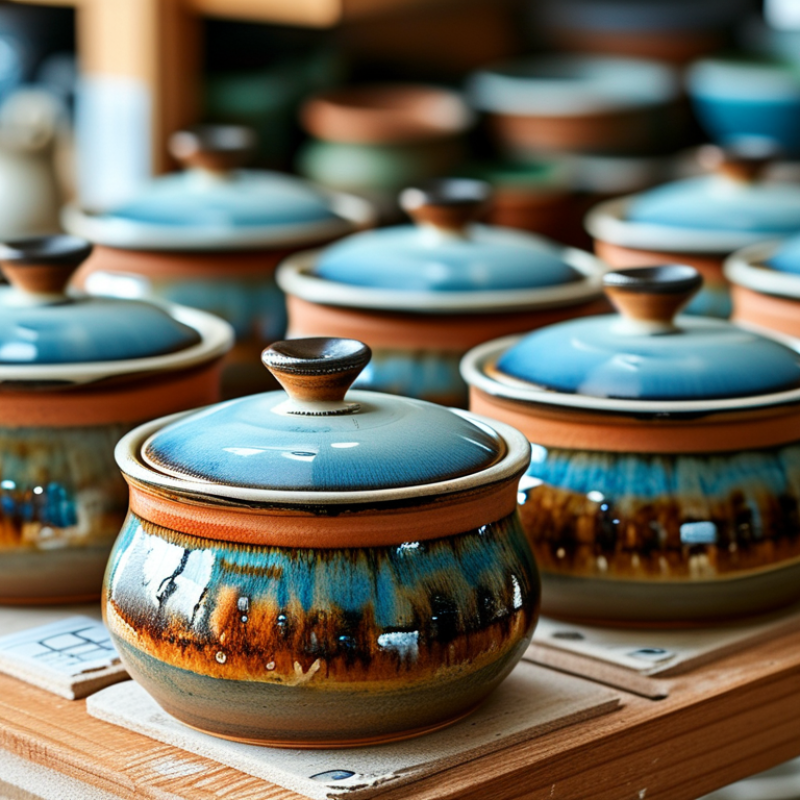
Buying ceramic cookware wholesale requires more than comparing unit prices. Identify the ceramic type before discussing quantity. Earthenware is attractive but usually less durable. Stoneware offers stronger daily performance and good heat retention. Porcelain is dense, smooth, and often lighter. Vitrified ceramic can resist moisture, staining, and repeated use more effectively. Ask whether the cookware suits ovens, stovetops, microwaves, and dishwashers.
Request physical samples from every proposed production batch. Inspect the glaze for pinholes, uneven color, sharp rims, and hairline cracks. Test handles with a firm hand grip. Check the base for flat contact and wobbling. Thermal-shock testing matters because sudden temperature changes can break ceramic cookware. Ask for documented food-contact testing, including heavy-metal migration results, where required. Confirm the factory’s quality-control process, inspection frequency, and defect allowance in writing.
Wholesale requirements should cover minimum order quantity, sample fees, lead time, packaging, replacement terms, and shipping dimensions. A carton with molded protection may cost more, but it can reduce breakage during transport. Verify product measurements, usable capacity, weight, and carton markings before approving production. Do not rely only on attractive photographs. Glaze colors can shift between batches, and that problem is easy to underestimate. A small trial order may reveal stacking issues, weak packaging, or customer handling complaints. Leave room for improvement; the cheapest quotation is not always the most dependable choice.

10 Tips for Buying Ceramic Cooking Ware Wholesale
When buying ceramic cooking ware wholesale, inspect the body material before comparing prices. Dense stoneware usually feels heavier and resists everyday impact better than low-fired ceramic. Hold each sample near a window. Tiny pores, pinholes, or uneven edges can reveal weak production control. I once accepted a polished sample that later showed hairline cracks after repeated heating. That mistake changed how I assess suppliers.
Glaze quality deserves equal attention. Look for a smooth, continuous surface without bubbles, crawling, or dull patches. Ask whether the glaze is tested for lead and cadmium migration. Request recent laboratory reports and confirm they match the exact product and firing process. Check applicable food-contact requirements in your sales market. Safety claims without traceable documents are not enough. They are only promises.
Test performance with real handling. Place lids on several units and check their fit, steam vents, and handles. Examine heat resistance, thermal-shock results, and cleaning instructions. A supplier should explain firing temperatures, raw materials, quality checks, and acceptable defect rates. Inspect cartons too; poor cushioning can ruin excellent ware during transit. Compare ten random pieces, not just one attractive sample. Some flaws appear only in the tenth piece. My own inspection process still misses details, especially under rushed deadlines, so independent testing remains worthwhile. Keep written records of every batch and correction.
Water absorption is a useful first-screening indicator when comparing ceramic cooking ware suppliers. Common ASTM C373-style classifications use thresholds of up to 0.5% for impervious bodies, more than 0.5% to 3% for vitreous bodies, and more than 3% to 7% for semi-vitreous bodies. Lower absorption generally indicates a denser ceramic body, but it does not prove food-contact safety. Buyers should also request glaze lead and cadmium migration reports, thermal-shock testing, and documentation for the destination market’s safety standards.
Wholesale ceramic cookware buying starts with supplier verification, not a glossy catalog. Grand View Research estimated the global ceramic tableware market at about USD 10.5 billion in 2023. Growth attracts factories with uneven quality systems. Ask for kiln numbers, monthly output, firing temperatures, defect rates, and production records. Capacity means usable output, not theoretical capacity. Request samples from normal batches. Inspect rims, handles, bases, and glaze consistency.
Compare three suppliers using identical questions. Check factory age, workforce stability, quality inspections, packaging tests, and delivery history. The World Bank’s 2023 Logistics Performance Index evaluates customs, tracking, and shipment timeliness. These factors often explain delays better than a low quoted price. Ask for the supplier’s average lead time during peak months. Leave a buffer. Ceramic breakage is rarely theoretical when cartons meet rough handling. I would not trust one perfect sample.
Customization requires stricter controls. Confirm mold ownership, minimum order quantities, glaze limits, logo methods, and replacement policies. Request a written approval sample before mass production. For food-contact products, use an accredited laboratory to test lead and cadmium migration under ISO 6486 methods. A custom glaze may look excellent under showroom lights, then vary after repeated firing. This is easy to underestimate. Grand View Research also identifies premium design and product differentiation as market growth factors, but customization can increase tooling costs and slow replenishment. Compare total landed cost, not factory price alone. Keep every specification, test result, and correction in writing.
A practical comparison framework for evaluating ceramic cookware suppliers, production capability, quality controls, customization, and landed-cost factors.
| Tip | Comparison Dimension | Useful Wholesale Benchmark | Information to Request | Recommended Buying Action |
|---|---|---|---|---|
| 1 | Supplier manufacturing capacity | Confirm monthly output by product category. A factory should provide separate capacity figures for forming, glazing, firing, inspection, and packing rather than one broad production claim. | Monthly capacity, number of production lines, kiln dimensions, kiln cycle time, current utilization, and peak-season capacity. | Compare the supplier’s available capacity with your forecasted monthly demand and require a written production schedule for large orders. |
| 2 | Minimum order quantity | Common indicative MOQs range from 300 to 3,000 pieces per design or color. Custom molds, decals, and special packaging usually increase the MOQ. | MOQ by shape, glaze color, size, decoration, packaging format, and reorder quantity. | Request separate quotations for stock items, semi-custom products, and fully customized products to identify the lowest-risk starting option. |
| 3 | Material and heat-performance specifications | Ceramic cookware may use stoneware, porcelain, or other ceramic bodies. Typical firing temperatures are approximately 1,100–1,300°C, depending on the body and glaze system. | Clay-body composition, firing temperature, thermal-shock test method, maximum oven temperature, freezer suitability, and direct-flame restrictions. | Match the material to the intended use. Do not assume that an oven-safe ceramic item is suitable for stovetop, grill, or open-flame cooking. |
| 4 | Food-contact and safety testing | Finished products should be tested for lead and cadmium migration under the regulations applicable to the destination market. | Recent third-party test reports, test sample identification, laboratory accreditation, glaze composition controls, and compliance documentation for the target market. | Verify that the report covers the exact body, glaze, decoration, and product code being purchased; do not rely only on a generic factory certificate. |
| 5 | Quality-control system | A capable supplier should use incoming-material checks, in-process inspections, final inspection, and documented defect classification. | Inspection checklist, acceptable quality limits, inspection sampling plan, defect photographs, corrective-action procedure, and batch traceability. | Agree on measurable standards for cracks, pinholes, glaze defects, warping, color variation, dimensions, and packing damage before production starts. |
| 6 | Customization capability | Customization levels normally progress from stock color, logo decoration, custom color, shape modification, to new mold development. | Available glaze palette, logo methods, decoration limitations, color-matching process, mold ownership, mold fee, and sample approval procedure. | Use a signed golden sample or approved digital specification. Define who owns the mold and whether the supplier may use the design for other buyers. |
| 7 | Lead time and production planning | Typical production lead time is about 30–60 days for repeat items; new molds, custom colors, and complex decoration can extend the schedule. | Sample lead time, mold-development time, production time, inspection time, packing time, holiday shutdowns, and shipment-ready date. | Separate sample approval, production, and logistics dates in the purchase contract. Build contingency time for kiln delays and rework. |
| 8 | Packaging and breakage protection | Individual protection, dividers, cushioning, and strong export cartons are essential because ceramic products are brittle and heavy. | Packaging drawings, carton dimensions, drop-test method, pallet configuration, inner-box options, carton weight, and historical damage rate. | Approve a packaging sample before mass production and calculate container utilization together with expected breakage and replacement procedures. |
| 9 | Total landed cost | Unit price is only one component. Total cost can include mold fees, decoration, packaging upgrades, testing, inland transport, freight, duties, and inspection. | Price basis, tooling charges, sample fees, packaging cost, shipping terms, carton quantity, gross weight, volume, payment terms, and replacement policy. | Compare suppliers using the same product specification and shipping basis. Calculate cost per sellable unit after estimated breakage and logistics charges. |
| 10 | Supplier reliability and scalability | A reliable supplier should show consistent product records, documented processes, stable raw-material sourcing, and the ability to support repeat orders. | Production references without confidential buyer information, audit results, capacity records, business continuity plan, reorder performance, and payment history requirements. | Start with a paid pilot order, conduct a pre-shipment inspection, and use performance-based volume increases rather than committing immediately to the largest order. |
Wholesale ceramic cooking ware needs more than a low factory price. Start with landed cost. Include the unit price, packaging, freight, inspection, duties, payment fees, and breakage reserves. For example, 500 pieces at $8.40 each may become $10.35 after these additions. That difference changes the decision quickly. Small details matter.
Grand View Research’s 2024 ceramic cookware analysis estimates the global market at about $2.1 billion in 2023. It also projects roughly 6.4% annual growth through 2030. Demand looks promising, but growth does not guarantee healthy margins.
UNCTAD’s Review of Maritime Transport 2024 states that over 80% of global merchandise trade by volume moves by sea. Freight volatility can therefore erase a planned profit. Request current freight quotes, not last season’s estimates.
Ask about the minimum order quantity, then calculate its cash impact. An MOQ of 500 units at a $10.35 landed cost requires $5,175 before storage and promotion. A $15.50 wholesale price gives a 33.2% gross margin, not a 50% markup. Reserve three to five percent for chips, returns, and inspection failures. Test glaze durability and thermal shock before scaling. Request batch records and safety-test documents. My early spreadsheets often looked too optimistic because I ignored slow-moving colors. Recheck margins at 70% sell-through. That uncomfortable scenario is usually more useful than the perfect forecast.
When buying ceramic cooking ware wholesale, sample inspection should guide every later decision. Request matching samples from the same production batch, not only showroom pieces. Check the glaze under bright light for pinholes, dull patches, hairline cracks, and uneven coloring. Run a finger around each rim. It should feel smooth, without sharp edges. Test lids, handles, and stacking space. A sample can look excellent yet fail after repeated heating. That happened to one trial order I reviewed, where several handles loosened during basic kitchen testing. The lesson was uncomfortable but useful.
Tip 1: Test samples with hot and cold water. Record temperature changes, stains, odors, and visible damage. Ask for food-contact documents and written specifications. Keep photographs with the inspection date. Small details matter.
Shipping can quietly damage a profitable order. Confirm carton strength, inner padding, pallet dimensions, and moisture protection before payment. Ask for a packing video showing corner protection and product separation. Calculate shipping by volume, not weight alone. Ceramic products often occupy more space than expected. Leave room for breakage. A few spare pieces may protect customer deliveries, but they also increase freight costs. Agree on the inspection period, damage evidence, replacement terms, and responsibility for transport claims.
Tip 2: Approve a final packing sample. Tip 3: Compare freight quotes carefully.
Before finalizing, place approved measurements, glaze colors, tolerances, packaging, quantities, and delivery dates in one signed document. Clarify acceptable defects, refund procedures, and payment stages. Avoid vague promises. They create expensive arguments. A small pilot order is often wiser than an ambitious first shipment. Wholesale pressure encourages quick decisions, but careful records make mistakes visible before they multiply.
©2024 Pine Vista LLC, DBA Design Manufacturing Group. All Rights Reserved.


©2024 Pine Vista LLC, DBA Design Manufacturing Group. All Rights Reserved.
