

7 Toilet Brush Buying Tips for Bulk Buyers

Buying toilet brushes in bulk is not just a matter of choosing the lowest unit price. The wrong design can create storage problems, wear out quickly, or disappoint the people who use it every day. A Toilet Brush may look simple, but details such as bristle stiffness, handle length, holder ventilation, and material quality affect its performance. Small differences matter.

For purchasing teams, a clear checklist can make comparisons more reliable. These seven buying tips focus on practical checks: inspect samples, compare construction, confirm packaging dimensions, and ask suppliers about replacement options. Check the bristles closely. Do they reach beneath the rim without bending too easily? Does the holder stay steady on a wet tile floor? Such details are easy to overlook in a product listing. They are harder to ignore after a shipment arrives.

Bulk orders also deserve careful review of consistency. Request clear specifications, compare samples from the same production run when possible, and confirm that quoted quantities match the packing plan. A low price can be attractive, but it may not tell the whole story. Some judgments still require hands-on testing; photos cannot show how a handle feels after repeated use. That is an imperfect part of buying online. Use these tips to assess quality, fit, and value before committing to a large order.
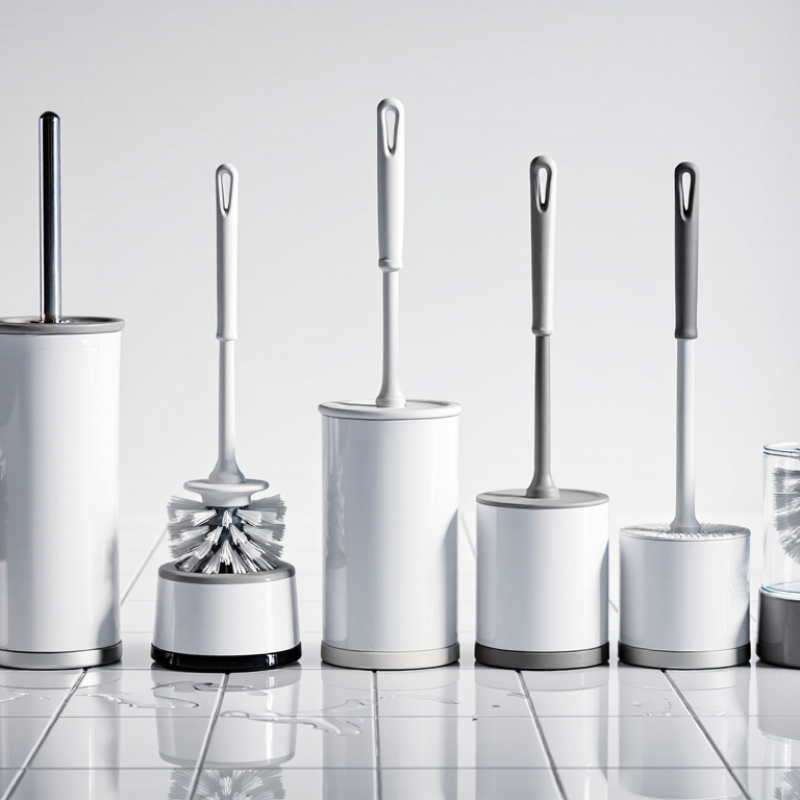
7 Toilet Brush Buying Tips for Bulk Buyers

Understanding Bulk Requirements for Toilet Brush Procurement

Bulk procurement starts with demand, not carton price. Estimate monthly usage by site, then separate steady demand from seasonal spikes, new-site openings, and replacement stock. A hotel, school, and janitorial distributor may use the same brush differently. Count units per location and set a realistic buffer for delayed deliveries. Keep it modest.

Define the product in measurable terms: overall length, head diameter, bristle stiffness, handle material, and whether the head can be replaced. Ask suppliers to confirm dimensions and carton quantity in writing. Request samples that match the stated production specification, not just a display sample. Test them in actual bathrooms; water pooling around the holder can reveal a design issue that a photo misses. Small details matter.

Compare landed cost per usable unit, including inner packaging, freight, expected breakage, and storage space. A low unit price is not useful if oversized cartons crowd a small storeroom. Set inspection criteria before ordering: acceptable color variation, handle alignment, bristle shedding, and packaging damage. Even a careful forecast can be wrong. Review feedback from the first shipment before committing to repeat volumes; procurement plans may need adjustment.

Comparing Brush Materials, Shapes, and Cleaning Performance

7 Toilet Brush Buying Tips for Bulk Buyers
Comparing Brush Materials, Shapes, and Cleaning Performance

For bulk orders, compare materials under wet conditions, not just in a catalogue. Polypropylene handles are light and easy to rinse; nylon bristles can provide firm scrubbing, while softer bristles may bend sooner under pressure. Silicone heads often release visible debris easily, but they may not scrub dried residue as aggressively. Feel the difference. Ask suppliers for bristle-retention and repeated-use test results, then trial brushes against bowl rims, under the rim, and around the waterline. A round head can cover broad surfaces; an angled or tapered head may reach narrow spaces better. Not always. Shape matters less if the bristles lose stiffness quickly.

For lifecycle decisions, the OECD’s Global Plastics Outlook (2022) reports that only 9% of plastic waste was recycled globally in 2019. UNEP’s Turning off the Tap (2023) estimates plastic pollution could fall 80% by 2040 through system-wide changes. Neither report measures toilet brushes, so treat these figures as procurement context, not product-performance proof. Compare total replacement needs: a durable handle with replaceable heads may reduce discarded material, but only if replacement heads remain available. Test it wet. Record cleaning time, visible residue, bristle wear, and drying between uses across several units. One awkward detail: a brush that cleans well may still drip onto the floor if its holder drains poorly.

7 Toilet Brush Buying Tips for Bulk Buyers - Comparing Brush Materials, Shapes, and Cleaning Performance

Use these practical comparison points to match brush construction to the cleaning tasks, maintenance routines, and replacement needs of your intended users.

Buying Tip Material or Design to Compare Typical Cleaning Performance Bulk-Buyer Checks
1. Match bristle material to the task Polypropylene (PP) bristles are common in conventional toilet brushes. Flexible elastomer or silicone-style heads are another option. PP bristles provide direct scrubbing action and can reach into uneven surfaces. Flexible heads are easy to rinse and are often less absorbent, but may be less effective on stubborn, dried-on deposits depending on their design. Request samples and test both options on representative bowls and soil types. Compare bristle stiffness, head retention, and cleaning results after repeated use.
2. Choose a shape for bowl coverage Round heads suit general-purpose cleaning; tapered or angled heads are designed to reach beneath the rim and into narrower areas. A well-shaped head can improve access around the bowl and beneath the rim. Shape alone does not guarantee performance: bristle arrangement and handle angle also matter. Check access beneath the rim on the bowl styles used at your sites. Confirm that the head can reach target areas without excessive bending or force.
3. Compare head size and bristle density Heads range from compact designs to broader heads with more bristles. Bristles may be arranged in tufts or across a molded head. A compact head can maneuver into tighter areas, while a broader head may cover more surface per stroke. Dense or stiff bristles can scrub firmly but may be harder to rinse clean. Evaluate maneuverability, rinse-out time, and debris removal. Confirm that the head fits the intended bowl geometry and that bristles remain secure in use.
4. Assess handle material and construction Handles are commonly made from plastic or metal, sometimes with a coated or textured grip. Check the joint between handle and head. A rigid handle helps transfer scrubbing force. A secure, corrosion-resistant construction is important in a wet environment; a comfortable grip can help with repeated cleaning. Inspect the handle-to-head connection, grip, finish, and resistance to loosening. Ask suppliers about construction details and test products after repeated wet use.
5. Consider holder drainage and ventilation Holders may be open, ventilated, or enclosed, and may include a drip tray or removable insert. Allowing the brush to drain and dry between uses can reduce standing water in the holder. Enclosed designs may contain drips but need practical cleaning and drying arrangements. Check stability, spill control, ease of cleaning, and whether removable parts can be washed. Verify the assembled set fits the available storage space.
6. Review replacement-head compatibility Some brushes have fixed heads; others use replaceable heads. Attachment systems and replacement availability vary by product. Replaceable heads can reduce the need to discard the whole handle, provided the fit is secure and replacement parts remain available. Confirm compatibility in writing, replacement-part availability, minimum order quantities, and whether the handle and head can be ordered separately.
7. Test durability and consistency before ordering Compare bristle retention, head shape, handle strength, holder fit, and consistency between production samples. Performance over time depends on materials, construction, frequency of use, and cleaning practices. A single sample cannot establish long-term service life. Set acceptance criteria, inspect a representative sample, and request product specifications. For large orders, agree on packaging, shipment quantities, and a process for handling defects.

Evaluating Handles, Holders, and Hygiene Features

For bulk buyers, a toilet brush handle should feel secure with wet hands. Check grip texture, shaft length, and the joint between handle and head. A loose connection can wobble after repeated use. Stainless steel resists corrosion, while coated plastic is lighter and often easier to replace. Compare samples before ordering. A showroom impression can miss small flaws.

The holder matters just as much. Look for a stable base that keeps the brush upright and limits splashes. A removable drip tray makes routine cleaning easier. Ventilation helps the head dry between uses, though no holder stays clean without regular care. Small details matter. Check that the holder can be opened and wiped without awkward corners. Also consider storage space: a wide base may not fit neatly beside every toilet.

Tips: Test handle comfort with gloves and bare hands. Inspect seams, fasteners, and head replacement options. Ask suppliers for material details and care instructions. If possible, trial a few units in a real cleaning routine; a design that looks practical may still collect residue in hard-to-reach joints. Bulk pricing is useful, but replacement parts and upkeep affect the longer-term value.

7 Toilet Brush Buying Tips for Bulk Buyers

Illustrative 1–5 planning scores compare key procurement considerations; they are not survey results. Prioritize durable, easy-to-clean handles and holders, along with hygiene features suited to your cleaning routine.

Checking Durability, Safety, and Quality Standards

For bulk orders, durability should be tested, not guessed from a thick handle or glossy finish. Ask suppliers for documented bristle-retention, handle-bend, and head-attachment tests. A simple incoming check helps: pull the head firmly, flex the handle, and inspect for loose tufts or sharp molding seams. Small details matter. A brush that sheds bristles or cracks near the neck can become a repeat replacement cost.

Safety and material quality need equal attention. Request material specifications and relevant chemical-compliance documents for the markets where the brushes will be sold. Check that the handle has no burrs, the head locks securely, and the holder drains without pooling water. These details reduce handling risks and make routine cleaning easier. Still, a heavier brush is not automatically safer or longer-lasting; I would compare test results across samples before setting a purchase standard.

End-of-life claims deserve scrutiny, too. The OECD’s Global Plastics Outlook reports that plastic waste reached 353 million tonnes worldwide in 2019, with only 9% ultimately recycled after losses. That figure is not specific to toilet brushes, but it supports asking suppliers for clear material breakdowns and realistic recycling guidance. For bulk purchasing, record sample results by batch, including breakage, bristle loss, and fit in the holder. A few tests may miss a flaw. Recheck them.

Assessing Suppliers, Pricing, and Delivery Terms

A low unit price means little if the brush head loosens after a few uses. Ask suppliers for samples from the production line, not just polished display pieces. Check bristle stiffness, handle joints, drainage holes, and carton strength. Request recent inspection records and a written defect policy. Small details matter. I still find carton dimensions easy to overlook; they can change freight costs considerably.

Compare quotes on the same basis. Separate brush cost from packaging, tooling, inland transport, and shipping. Confirm order quantities and price breaks in writing. The World Bank’s 2023 Logistics Performance Index assessed 139 economies across six dimensions, including tracking and timeliness. Use it as country-level context, not proof of a supplier’s reliability. A factory’s own shipment records matter more.

Agree on dispatch dates, shipment milestones, packaging specifications, and what happens if goods arrive damaged. Name the delivery term and destination precisely, then confirm who handles each freight cost and document. UNCTAD’s Review of Maritime Transport 2024 reported 2.4% growth in maritime trade in 2023 and projected 2.0% for 2024, amid disrupted routes and volatile freight rates. Build a realistic buffer into the delivery window. Ask whether partial shipments are possible, and get any surcharge approved before production begins.

137 Seacoast Ave, New York, NY 10094
+1 (234) 466-9764
Excuisite food, unforgettable atmosphere...