

7 Best Capsule Cabin Suppliers for Global Buyers?

Choosing the right Capsule Cabin supplier requires more than comparing photos and advertised prices. Global buyers must examine construction quality, thermal insulation, ventilation, electrical systems, fire protection, and installation support. A stylish cabin may look impressive online, yet perform poorly in humid coastal weather or freezing mountain conditions. This guide reviews seven notable Capsule Cabin suppliers through practical purchasing criteria, including manufacturing experience, material transparency, customization options, certifications, delivery capacity, warranty terms, and after-sales service.

Real projects reveal important details. Ask for factory videos, project references, material samples, and clear technical drawings. Check how suppliers handle moisture control, emergency exits, bathroom connections, and replacement parts. Delivery planning also matters, especially when cabins travel across borders or require cranes on remote sites. No supplier is perfect. Even experienced manufacturers may communicate slowly or underestimate installation challenges. That deserves attention. Buyers should compare total ownership costs instead of focusing only on the initial quotation. A cheaper unit may require stronger foundations, extra insulation, or costly local modifications. The best choice depends on climate, land access, guest expectations, budget, and operating plans. This comparison aims to support careful decisions with balanced information, practical questions, and realistic expectations. Suppliers change over time, so readers should verify current certifications, production schedules, and commercial terms before signing any agreement.
7 Best Capsule Cabin Suppliers for Global Buyers?

What Are Capsule Cabins and How Do They Work?

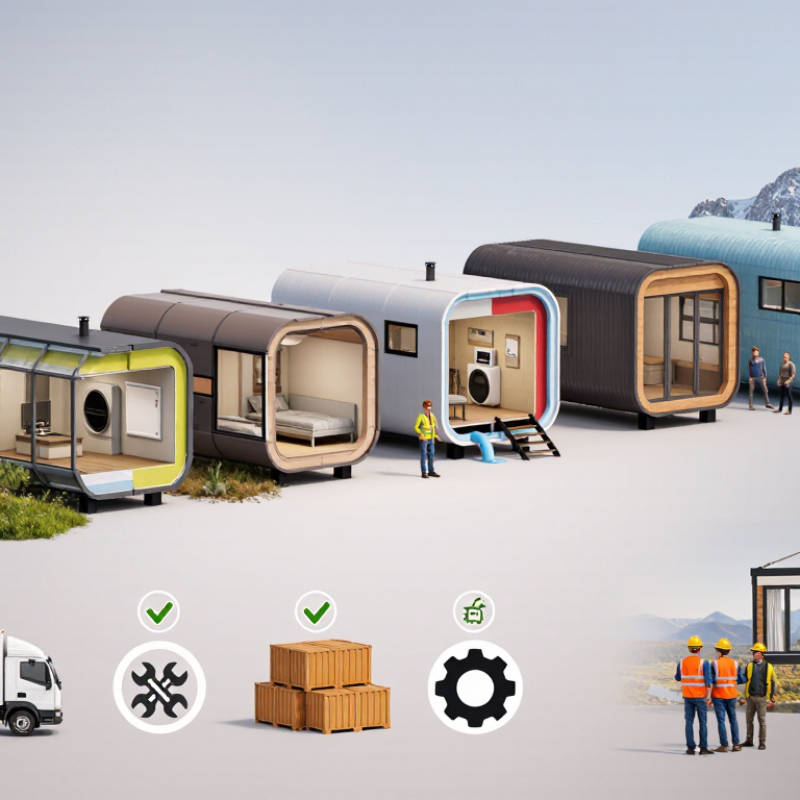
Capsule cabins are compact, prefabricated living units designed for short stays, remote sites, and tourism projects. Their curved shells reduce unused space and improve weather protection. Most units use a steel or aluminum frame, insulated wall panels, glazing, and factory-installed interior modules. Buyers usually receive a nearly finished cabin, rather than loose construction materials.

The cabin works through coordinated systems. Electricity powers lighting, appliances, ventilation, and climate control. Water lines serve the shower, sink, and toilet. Wastewater requires an approved drainage solution. Some cabins connect to local utilities, while others use independent tanks or renewable power equipment. Delivery access matters greatly. A beautiful cabin may fail if trucks cannot reach the site. Field checks should include wind exposure, foundation levels, fire safety, insulation performance, and local building requirements. Specifications can still be misunderstood, especially when suppliers use different testing methods.

Tips: Request drawings, load data, material certificates, warranty terms, and installation instructions before ordering. Confirm what the quoted price excludes. Transport, foundations, permits, and utility connections often create unexpected costs. Ask for recent project evidence, not only polished photographs. A factory video is useful, but it does not replace an independent inspection. Leave room for doubt; some “ready-to-use” cabins need more site work than expected.
Key Factors for Evaluating Capsule Cabin Suppliers

Choosing among the seven best capsule cabin suppliers requires more than comparing glossy renders and unit prices. Demand is growing with flexible tourism. UN Tourism reported about 1.4 billion international tourist arrivals in 2024, nearly returning to 2019 levels. Meanwhile, Grand View Research estimated the global modular construction market at USD 87.4 billion in 2022. That figure signals opportunity, not automatic quality.

Evaluate suppliers across seven practical areas: structural design, fire resistance, insulation, waterproofing, manufacturing control, logistics, and after-sales support. Ask for signed test reports, material certificates, factory inspection records, and installation procedures. Check wall and roof U-values, acoustic ratings, wind-load calculations, and moisture protection. A cabin may look quiet during a showroom visit, yet rain can expose weak joints within one season. Ask how quickly damaged panels, locks, plumbing parts, and ventilation units can be replaced.

Production consistency matters more than a perfect sample. ISO 9001-based quality procedures can help, but certification alone proves little without traceable inspection records. Compare warranty coverage, exclusions, spare-part availability, and response times in writing. Review the supplier’s experience with your climate, road access, local permits, and electrical standards. I would also request a pilot unit before ordering at scale. It costs more upfront. It may reveal awkward maintenance access or excessive heat gain. That small inconvenience can prevent a much larger mistake.

Seven Leading Capsule Cabin Suppliers for Global Buyers

Seven Leading Capsule Cabin Suppliers for Global Buyers

The seven leading capsule cabin suppliers serve different project needs. Some focus on compact hotel pods, while others develop mobile cabins for resorts, campsites, and private retreats. Their strongest products usually combine steel framing, insulated wall panels, low-energy lighting, and factory-controlled assembly. Buyers should examine thermal performance, waterproofing details, and ventilation before comparing prices.

Experienced suppliers can provide layout drawings, structural data, installation guides, and replacement-part support. Reliable companies also explain delivery limits, local foundation needs, and maintenance schedules clearly. However, a polished catalog does not guarantee field performance. Ask for project references, production photographs, and independent test records. A supplier that welcomes technical questions often deserves closer attention.

Tips: Request a complete quotation, including transport, lifting equipment, taxes, installation, and commissioning. Confirm whether plumbing and electrical systems match local requirements. Inspect door seals and roof joints carefully; these small details often affect comfort. Order a sample room or factory inspection when practical. Delivery promises can sound attractive, but port delays and site access may change the schedule. Leave room for mistakes in your budget. Even careful planning misses something.

Seven Leading Capsule Cabin Supplier Evaluation Criteria for Global Buyers

This reference chart uses a 100-point procurement framework for comparing capsule cabin suppliers without displaying company or brand data. Compliance, build quality, customization, delivery capability, after-sales support, total cost, and export experience are key considerations for international buyers.

How to Compare Designs, Features, Prices, and Certifications

7 Best Capsule Cabin Suppliers for Global Buyers?

Comparing capsule cabin suppliers requires more than checking the lowest quotation. Grand View Research reports that the global glamping market is expanding at a double-digit annual rate through 2030. This growth attracts inexperienced manufacturers. Buyers should request factory records, completed projects, and climate-specific testing evidence.

Design comparison starts with usable floor area, ceiling height, ventilation, and maintenance access. A compact cabin may look efficient, yet poor airflow can create condensation behind wall panels. Ask for thermal transmittance values, fire-resistance ratings, acoustic test results, and structural load calculations. These details reveal engineering quality better than glossy renderings. Site experience matters.

Features should match the destination. Coastal projects need corrosion-resistant fixings and drainage protection. Cold regions require tested insulation and freeze-resistant plumbing. Price comparisons must include transport, cranes, foundations, installation, spare parts, and local taxes. A 2024 report from Grand View Research identifies modular construction as a major efficiency trend, but factory speed does not guarantee lower lifetime costs. The cheapest offer may become expensive later.

Certification checks need careful judgment. Suppliers should provide traceable material certificates, electrical test reports, and quality procedures aligned with ISO 9001. Environmental claims can be reviewed against ISO 14001 practices. For European projects, confirm applicable CE requirements for electrical systems, while local building approval remains separate. Documentation is often incomplete. That is a warning sign, not a minor inconvenience. Suppliers should accept independent inspections before shipment and after installation.

What to Check Before Ordering and Installing Capsule Cabins

Before ordering a capsule cabin, verify the supplier beyond attractive renderings. Ask for structural drawings, material specifications, fire-performance reports, electrical test records, and weather-resistance ratings. McKinsey reports that modular construction can reduce project schedules by 20–50%, but factory speed does not remove installation risks. A poorly sealed joint can admit rain, dust, and insects within weeks. Check the roof membrane, window drainage, insulation thickness, and replacement process for damaged panels.

Transport planning deserves equal attention. Confirm the packed dimensions, lifting points, total weight, road restrictions, and unloading equipment before signing. A cabin may fit the site but fail at the gate. Request a foundation layout showing anchor positions and allowable tolerances. Suppliers should also explain ventilation rates, heating loads, plumbing connections, and emergency access. The International Energy Agency reported that buildings consumed about 30% of global final energy in 2022, so efficient lighting, insulation, and climate control affect long-term operating costs.

Review warranty coverage carefully. Separate factory defects, transport damage, installation errors, and local maintenance responsibilities. Obtain a spare-parts list and realistic response times. Independent inspection is worthwhile, especially for cabins placed in coastal, snowy, or high-wind areas. Do not rely only on digital certificates. Details matter. I would also test one completed unit before approving a large order. That extra step may expose awkward furniture, noisy ventilation, or condensation problems. The first supplier quote is rarely the full project cost.

7 Best Capsule Cabin Suppliers for Global Buyers? - What to Check Before Ordering and Installing Capsule Cabins Comparison based on supplier capability, product configuration, documentation, logistics, and installation readiness. Supplier names and brands are intentionally omitted.
No. Supplier Profile Best-Fit Application Typical Cabin Configuration to Verify Key Technical Data to Request Documents and Compliance Checks Typical Production Planning Range Installation and Site Requirements
1 Turnkey Modular Cabin Supplier Hotels, resorts, worker accommodation, and multi-unit projects requiring coordinated design, manufacturing, delivery, and installation. 18–35 m² Bedroom + bathroom Factory-fitted interiors Confirm structural calculations, floor loading, wall and roof build-up, thermal performance, waterproofing method, ventilation, fire resistance, and service-life assumptions. Request general arrangement drawings, structural calculations, electrical diagrams, plumbing layouts, material specifications, inspection records, and warranty terms. Common planning allowance: 12–24 weeks from approved drawings to production completion, excluding permitting and international shipping. Requires prepared foundations, crane access, utility connection points, drainage planning, lifting points, and a documented on-site commissioning procedure.
2 Prefabricated Pod Cabin Supplier Glamping sites, eco-resorts, remote tourism projects, and locations where rapid placement is more important than extensive customization. 12–28 m² Compact bathroom Pre-installed fixtures Check insulation thickness, condensation control, window performance, bathroom waterproofing, hot-water capacity, air-conditioning provision, and replacement-part availability. Verify product drawings, fire and material declarations, electrical test reports, plumbing pressure-test records, and installation manuals suitable for the destination country. Typical planning allowance: 8–18 weeks for standard models; custom layouts generally require additional engineering and approval time. Confirm whether the unit needs screw piles, concrete pads, strip foundations, or another support system. Verify road width, turning radius, and unloading access.
3 Flat-Pack Capsule Cabin Supplier Projects with restricted transport access, high shipping costs, difficult terrain, or requirements for local assembly. 15–30 m² assembled Knock-down panels Local assembly Compare packed volume, panel dimensions, connection details, fastener corrosion protection, joint sealing, water ingress prevention, and assembly tolerances. Request packing lists, assembly sequence drawings, fastener specifications, torque requirements, lifting instructions, and a complete bill of materials. Typical planning allowance: 10–20 weeks, with on-site assembly commonly adding 1–3 days per unit depending on crew size and site readiness. Needs a level base, protected storage for components, basic lifting equipment, trained installers, weather protection during assembly, and final water-tightness inspection.
4 Expandable or Transport-Optimized Cabin Supplier Remote accommodation, emergency housing, seasonal lodging, and projects where shipping efficiency or rapid deployment is a major cost factor. 20–40 m² deployed Compact transport form Expandable layout Check folded and deployed dimensions, transport weight, expansion mechanism, wind resistance, locking points, floor level changes, and weather-sealing performance. Require deployment instructions, stability calculations, transport tie-down details, mechanical inspection records, and maintenance requirements for hinges or moving parts. Typical planning allowance: 10–22 weeks, depending on the expansion mechanism, interior fit-out, and quantity ordered. Confirm that the foundation and utility connections remain accessible after deployment. Allow clear working space around all moving sections.
5 Off-Grid and Energy-Independent Cabin Supplier Nature reserves, remote camps, islands, mountain sites, and areas with limited or unavailable utility infrastructure. 15–35 m² Solar-ready Water and waste options Evaluate energy-load calculations, battery capacity, solar-panel rating, backup power, water storage, wastewater treatment, heating, cooling, and seasonal operating limits. Request single-line electrical diagrams, battery safety documents, equipment manuals, water-treatment specifications, emergency procedures, and local environmental approvals. Typical planning allowance: 14–28 weeks because energy, water, and waste systems often require project-specific engineering. Verify solar orientation, wind and snow exposure, access for maintenance, potable-water testing, wastewater discharge rules, and winterization requirements.
6 Luxury Hospitality Capsule Supplier Boutique resorts, premium glamping developments, wellness retreats, and hospitality projects focused on interior finish and guest experience. 20–45 m² Premium finishes Large glazing Check acoustic performance, glazing safety, solar heat control, bathroom finish quality, furniture durability, lighting controls, HVAC noise, and replacement lead times. Request finish schedules, sample approvals, room data sheets, fire-performance declarations, cleaning instructions, and a defects-list procedure for handover. Typical planning allowance: 16–30 weeks, particularly when custom furniture, glazing, sanitaryware, or interior materials are specified. Plan for careful unloading, protected storage, final cleaning, furniture installation, guest-safety inspection, and a detailed snagging and handover process.
7 Climate-Specific Cabin Supplier Buyers operating in cold, hot, humid, coastal, high-wind, or high-snow regions that need adaptation beyond a standard cabin design. 15–40 m² Regional engineering Enhanced envelope Verify design temperature range, snow and wind loads, corrosion protection, vapor control, insulation continuity, drainage, shading, heating, cooling, and humidity management. Request site-specific structural calculations, climatic design assumptions, corrosion specifications, material durability data, energy calculations, and local code review. Typical planning allowance: 14–30 weeks; engineering time may increase when the destination has unusual wind, snow, seismic, or coastal conditions. Confirm foundation depth, anchoring, stormwater management, corrosion-resistant connections, access for seasonal maintenance, and local inspection requirements.
Note: The dimensions, capacities, and timeframes shown are indicative market-planning ranges rather than guarantees. Final values should be confirmed through project drawings, local building regulations, site surveys, shipping documents, and signed technical specifications before ordering.
137 Seacoast Ave, New York, NY 10094
+1 (234) 466-9764
Excuisite food, unforgettable atmosphere...