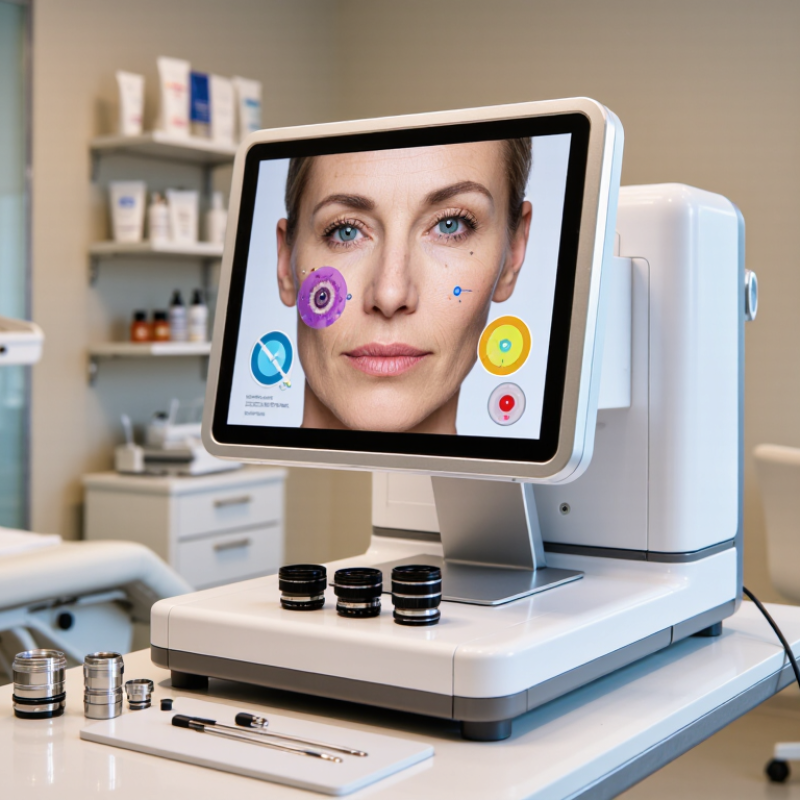
Choosing the right Facial Analysis Machine can feel like comparing identical black boxes. Their screens may show skin hydration, pores, oil balance, pigmentation, wrinkles, and sensitivity. However, measurement quality varies widely.
This guide examines ten leading facial analysis machines for global buyers. It considers imaging resolution, lighting control, software usability, report clarity, and customer support. It also reviews installation needs, calibration methods, warranty coverage, and regional service availability. These details matter in dermatology clinics, beauty salons, aesthetic centers, and professional skincare retail.
A reliable machine should produce consistent images under controlled lighting. It should protect client information through appropriate access controls and secure data practices. Buyers should also confirm local product requirements, electrical compatibility, language options, and training resources before purchase. Technical certifications can support confidence, but they do not replace practical testing.
Real-world experience often reveals what brochures omit. A device may look advanced yet require frequent recalibration. Another may offer fewer features but deliver clearer reports and easier staff training. Small screens can slow consultations. Weak software support can become expensive.
No ranking fits every market. Budget, treatment focus, customer volume, and available expertise shape the best decision. We encourage buyers to request demonstrations, compare sample reports, and question unclear performance claims. Some results may appear more precise than they truly are. That deserves careful reflection. Used responsibly, facial analysis technology can improve consultations, guide skincare recommendations, and help professionals explain visible changes with greater clarity.
Facial analysis machines are digital imaging systems used to examine visible skin conditions. They usually combine a high-resolution camera with controlled lighting. Some models use polarized light or near-infrared sensors. These tools capture details that ordinary room lighting can hide. Software then maps features such as pores, fine lines, redness, oiliness, and uneven pigmentation. The process is quick. A client usually sits still while the device records several facial views. Results appear as images, scores, or color-coded maps.
The analysis depends on consistent conditions. Clean skin, a neutral expression, fixed distance, and stable lighting improve repeatability. Algorithms compare captured patterns with reference data. They may estimate hydration or sun-related changes, but they do not replace clinical diagnosis. Experienced operators should explain how each reading was produced. They should repeat a scan when results conflict with visible signs or client history. That small step matters. Skin changes with temperature, exercise, cosmetics, and hormonal cycles. A single scan can therefore mislead.
Global buyers should examine sensor specifications, calibration procedures, software transparency, and user training. Data handling also deserves careful review. Facial images are sensitive personal information, so consent, storage limits, and access controls should be clear. Machines can support consultations and track changes over time. They should not encourage exaggerated claims or unnecessary treatments. A darker image is not automatically deeper pigmentation. A low hydration score is not a medical finding. Technology helps, but professional judgment remains imperfect too.
Top 10 Facial Analysis Machines for Global Buyers
Key Features Used to Compare Facial Analysis Machines
A reliable facial analysis machine should produce consistent results under ordinary lighting. Compare camera resolution, image clarity, and exposure control before reviewing cosmetic features. Some systems capture visible images, while others assess moisture, oil, texture, pores, pigmentation, and redness. Each measurement needs a clear definition. Otherwise, impressive graphics may create false confidence.
Repeatability matters more than a dramatic first report. Test the same person three times, using the same position and facial expression. Small changes should not create completely different recommendations. Strong systems provide calibration guidance, measurement ranges, and readable reports. They also explain how images become scores. That detail supports professional interpretation and informed customer discussions.
Data handling deserves equal attention. Buyers should examine storage location, user permissions, export options, and deletion controls. These practices must fit applicable privacy requirements in each market. A compact design helps busy clinics, but weak lighting control can reduce accuracy. No machine is perfect. Even trained staff may interpret results differently. This is where practical training, technical support, and documented testing become valuable. Some comparison processes overlook maintenance, yet a dusty lens or outdated software can quietly affect daily results.
Key features used to compare facial analysis machines. The percentages represent a normalized editorial weighting of practical purchasing criteria, not manufacturer scores.
Image quality, controlled illumination, measurement breadth, and repeatability receive the highest weighting because they directly affect analysis consistency. Privacy, interoperability, workflow speed, and maintenance are also important for global deployment.
Choosing among the top 10 facial analysis machines requires more than comparing screen size or software features. Strong systems combine standardized lighting, high-resolution imaging, and repeatable measurement. Common functions include wrinkle mapping, pore counting, pigmentation analysis, sebum estimation, hydration checks, and three-dimensional contour capture. Some models add polarized or ultraviolet imaging, revealing details that ordinary photographs miss. MarketsandMarkets estimated the global facial recognition market at approximately USD 5.5 billion in 2023, showing strong investment in visual analysis technologies. However, facial recognition and cosmetic skin analysis are different applications.
Global buyers should examine calibration records, measurement repeatability, language support, data export options, and operator training. A useful machine should produce comparable images after four weeks, not merely attractive reports.
NIST’s Face Recognition Vendor Test, Part 3, documented demographic differences in algorithm performance, sometimes exceeding tenfold across groups. This finding matters for facial analysis too. Lighting, skin tone, age, and camera distance can influence results. Ask suppliers for validation data covering diverse populations.
Look for evidence, not promises.
In practice, a clinic may need polarized imaging for redness, UV imaging for sun-related patterns, and 3D scanning for facial symmetry. The most expensive system may still be unsuitable for a small treatment room. Reports can also overstate precision when operators position clients differently. I would question any device that hides its testing method or provides unexplained scores. A practical shortlist should balance clinical workflow, regional privacy requirements, maintenance access, and verified accuracy.
Top 10 Facial Analysis Machines for Global Buyers
Choosing the Right Machine for Different Business Needs
Business goals should guide machine selection, not attractive specifications. McKinsey’s 2023 beauty report valued the global beauty market at about 430 billion dollars in 2022. It also projected roughly 580 billion dollars by 2027. This growth increases demand for measurable consultations. Small salons may need portable equipment, simple interfaces, and reports produced within minutes. Clinics usually require stronger imaging detail, repeatable lighting, and secure data storage. Retail environments often value speed, customer engagement, and easy staff training.
Look for measurable performance. Check image resolution, skin-area coverage, calibration methods, and software update policies. A reliable device should identify visible concerns without presenting medical diagnoses. It should also separate lighting effects from genuine skin changes. The International Organization for Standardization stresses controlled conditions for reliable measurements. Therefore, test the machine under different room lights and with several skin tones. Results can still vary. That limitation deserves honest discussion with customers.
Tips: Match the device to daily appointment volume. Request raw images, sample reports, and operator training before purchase. Compare warranty response times and local technical support. A salon serving 20 clients daily may prefer speed over advanced analytics. A dermatology-focused business may accept slower scans for deeper documentation. Do not trust a single accuracy percentage. Ask how it was tested, who participated, and whether independent validation exists.
Global buyers assessing the top 10 facial analysis machines should examine more than image quality. Purchasing teams need clear technical specifications, factory test reports, user manuals, and traceable component information. Check whether the device supports local electrical standards, wireless rules, and applicable product registration requirements. These requirements differ across markets. A machine accepted in one country may need additional review elsewhere.
Data handling deserves equal attention. Facial images, skin measurements, and customer profiles can involve sensitive personal information. Buyers should request written details about storage, encryption, access permissions, retention periods, and deletion procedures. Demonstration units should never be connected to live customer databases without approval. Compliance claims must be supported by documents, not sales language. That distinction matters.
After-sales service often determines the real cost of ownership. Confirm calibration intervals, replacement sensor prices, software update policies, and response times before signing a purchase agreement. Ask whether technicians can provide remote diagnosis and on-site training. A practical test is simple: request a sample warranty process and a spare-parts list. Support is practical. If the answer is vague, risk remains.
Installation conditions also matter. A bright treatment room, unstable network, or untrained operator can reduce measurement consistency. Buyers should request operating guidance for lighting, positioning, cleaning, and routine quality checks. In my experience, teams sometimes overvalue advanced features and undervalue staff training. That choice can produce impressive screenshots but unreliable customer records. A short pilot with real operators may reveal problems that a polished demonstration hides.
| Rank | Machine Type | Primary Imaging Method | Main Analysis Outputs | Typical Clinical or Commercial Use | Typical Purchase Range (USD) | Recommended Minimum Specifications | Key Compliance Documents to Request | Global Purchasing Considerations | After-Sales Requirements |
|---|---|---|---|---|---|---|---|---|---|
| 1 | Multispectral Facial Analyzer | Standard visible light, cross-polarized light, parallel-polarized light, and ultraviolet illumination | Pigmentation, redness, pores, wrinkles, texture, sebum-related appearance, and comparative treatment images | Dermatology clinics, aesthetic practices, medical spas, and professional skincare consultations | Approximately $8,000–$25,000 | At least three controlled lighting modes, fixed imaging distance, repeatable head positioning, and exportable reports | Electrical safety and electromagnetic compatibility reports; applicable market-specific medical-device documentation; optical and software documentation | Confirm whether the device is marketed as a cosmetic assessment tool or a medical device in the destination country; check voltage, plug type, language, and data-hosting location | Annual calibration guidance, software updates, remote technical support, replacement lighting modules, and operator training |
| 2 | 3D Facial Imaging System | Structured light, stereoscopic cameras, or depth-sensing cameras | Facial volume, contour, asymmetry, wrinkles, surface topography, and before-and-after dimensional comparison | Plastic surgery planning, orthodontic assessment, facial aesthetics, and treatment documentation | Approximately $12,000–$60,000 | Depth accuracy specification, repeatable facial positioning, 3D mesh export, image-registration tools, and secure data backup | Electrical and electromagnetic compatibility records; software validation information; privacy and cybersecurity documentation; applicable regional registration evidence | Review camera accuracy under different skin tones and lighting conditions; verify workstation requirements, cloud dependence, and local data-storage options | Calibration service, replacement camera availability, software version support, data migration, and technical training for imaging operators |
| 3 | UV Skin Imaging Analyzer | Ultraviolet illumination with visible-light reference images | Subsurface pigmentation patterns, oil distribution, sun-related changes, and selected surface irregularities | Skincare consultations, cosmetic education, sun-care programs, and retail or spa analysis | Approximately $2,000–$12,000 | Controlled UV exposure, shielding around the imaging area, consistent camera settings, and clear user instructions | Optical safety information, electrical safety records, electromagnetic compatibility documentation, and user-risk assessment | Confirm that UV exposure is limited and documented; check local rules for consumer-facing optical equipment and required safety labeling | Lamp or LED replacement policy, periodic output checks, operator safety training, and documented cleaning procedures |
| 4 | Polarized-Light Facial Analyzer | Cross-polarized and parallel-polarized photography | Redness contrast, pigmentation contrast, pores, fine lines, and surface texture | Aesthetic consultation, treatment progress tracking, cosmetic product comparison, and clinical photography | Approximately $3,000–$15,000 | Uniform illumination, fixed camera geometry, color-calibration reference, high-resolution imaging, and report templates | Electrical safety and electromagnetic compatibility records; software license terms; image-management and privacy documentation | Ask for reproducibility data, supported operating systems, local-language software, and compatibility with existing patient-record systems | Camera and light-source replacement, software support period, image-export assistance, and remote troubleshooting |
| 5 | AI-Assisted Skin Condition Analyzer | Visible-light imaging combined with algorithmic image analysis | Automated estimates of spots, wrinkles, pores, redness, skin tone evenness, and treatment-area changes | High-volume skincare consultations, clinics, pharmacies, and personalized product recommendations | Approximately $1,500–$15,000, plus possible software fees | Documented image-collection protocol, transparent scoring methodology, confidence indicators, and manual review capability | Software lifecycle documentation, cybersecurity controls, privacy policy, algorithm-performance information, and medical-device evidence where medical claims are made | Check whether artificial intelligence outputs are advisory or diagnostic; review subscription terms, cross-border data transfers, and algorithm validation across skin tones | Defined support response times, model-update policy, user training, data export, account recovery, and continuity if the cloud service ends |
| 6 | Handheld Facial Imaging Device | Compact RGB camera with optional polarized, UV, or magnification attachment | Localized pigmentation, pores, texture, oil appearance, and close-up treatment records | Mobile consultations, home-visit services, small clinics, beauty counters, and field demonstrations | Approximately $500–$6,000 | Stable illumination, rechargeable battery, calibrated image capture, secure wireless transfer, and replaceable accessories | Battery transport documentation, electrical safety records, electromagnetic compatibility information, wireless approvals, and privacy documentation | Confirm wireless frequency approvals, charging-plug compatibility, spare-battery availability, and offline operation when internet access is limited | Battery replacement, accessory availability, firmware updates, cleaning instructions, and repair or replacement turnaround time |
| 7 | Trichoscopy and Facial Hair Imaging System | High-magnification visible-light camera with macro or microscopic optics | Hair density, follicle appearance, facial hair distribution, enlarged pores, and localized skin-surface details | Hair-restoration consultations, dermatology, aesthetic clinics, and targeted skin assessment | Approximately $1,000–$10,000 | Interchangeable magnification levels, sharp focus, consistent illumination, image annotation, and side-by-side comparison | Electrical and electromagnetic compatibility documentation; software privacy controls; applicable medical-device documentation for clinical claims | Verify optical resolution rather than relying only on digital magnification; confirm compatibility with patient-management software | Lens and cable replacement, calibration checks, software updates, cleaning guidance, and operator education |
| 8 | Sebum and Hydration Measurement Station | Contact or non-contact optical, capacitance, or absorbent-strip measurement modules, often combined with facial imaging | Surface oil level, estimated hydration, selected pH-related measurements, and localized comparison results | Cosmetic consultations, skincare research, salons, spas, and product demonstrations | Approximately $800–$8,000 | Replaceable probes or test media, defined measurement area, repeatability data, disposable-contact policy, and digital result storage | Electrical safety records, electromagnetic compatibility documentation, material safety information for skin-contact parts, and hygiene instructions | Confirm whether consumables are proprietary or universal; calculate long-term costs for probes, strips, calibration standards, and disposables | Consumable supply continuity, probe calibration, hygiene training, replacement sensors, and clear measurement-error guidance |
| 9 | Portable Dermatoscopic Facial Imaging System | Polarized or non-polarized dermatoscopic illumination with high-resolution close-up imaging | Pigmented lesion documentation, vascular patterns, localized texture, and serial image comparison | Dermatology screening support, lesion monitoring, teledermatology, and specialist referrals | Approximately $700–$8,000 | High-resolution optics, contact and non-contact modes, image labeling, secure transfer, and standardized capture protocol | Medical-device documentation where diagnostic or screening claims are made; electrical safety, electromagnetic compatibility, privacy, and cybersecurity records | Ensure the intended use is legally permitted in each target market; do not treat image output as a diagnosis without qualified clinical review | Lens and illumination replacement, software compatibility, secure data export, clinical-user training, and repair support |
| 10 | Integrated Facial Analysis Kiosk | Multi-camera visible-light system with optional polarized, UV, or depth-imaging modules | Facial symmetry, wrinkles, pores, pigmentation, redness, skin tone, and customer consultation reports | Large clinics, retail chains, aesthetic centers, training facilities, and multi-location operations | Approximately $10,000–$50,000 | Automated positioning, touch-screen workflow, user access controls, multi-language interface, centralized reporting, and network management | Electrical safety and electromagnetic compatibility records; wireless approvals; software and cybersecurity documentation; applicable market-specific device evidence | Assess installation space, accessibility, network security, local-language support, import duties, warranty coverage, and total cost of ownership | On-site installation, preventive maintenance, remote monitoring, spare-part stock, service-level agreement, and user training for multiple locations |

©2024 Pine Vista LLC, DBA Design Manufacturing Group. All Rights Reserved.


©2024 Pine Vista LLC, DBA Design Manufacturing Group. All Rights Reserved.