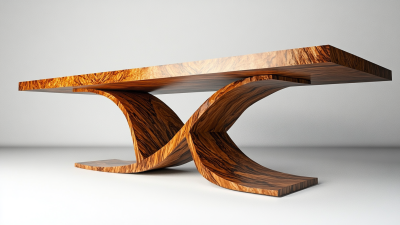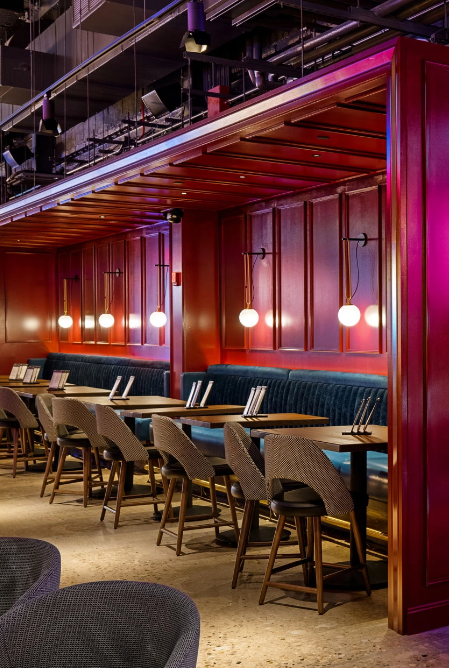

Choosing Restaurant Furniture Tables in 2026 requires more than matching a color palette. Tables influence guest comfort, service speed, cleaning routines, and revenue per seat. The choice becomes visible during every meal.
The National Restaurant Association reported that United States restaurant and foodservice sales were expected to reach $1 trillion in 2024. Its industry research also highlights persistent labor and operating-cost pressure. These conditions make durable, easy-clean tables more valuable than decorative pieces alone. Meanwhile, Grand View Research identifies growing demand for commercial restaurant furniture, supported by hospitality expansion and changing dining formats. Definitions vary between reports, so their figures should guide decisions, not replace local research.
David Rockwell, founder of Rockwell Group, describes restaurants as “the great American theater.” His point matters here. A table is part of that stage, but it must also survive hundreds of daily touches. Look closely at the edge banding, fasteners, underside coating, and base stability. A beautiful oak tabletop may fail near a wet service station. A compact laminate table may perform better, even if it feels less luxurious. That trade-off is easy to miss.
The strongest 2026 selection process should compare lifecycle cost, seating flexibility, accessibility, material certification, and repairability. Round tables can soften circulation, while rectangular tables often improve capacity. Neither shape wins everywhere. Measure real dining rooms, test sample surfaces, and ask staff for blunt feedback. Perfection is unlikely. The practical goal is a table that looks intentional, feels comfortable, and keeps working after opening night.
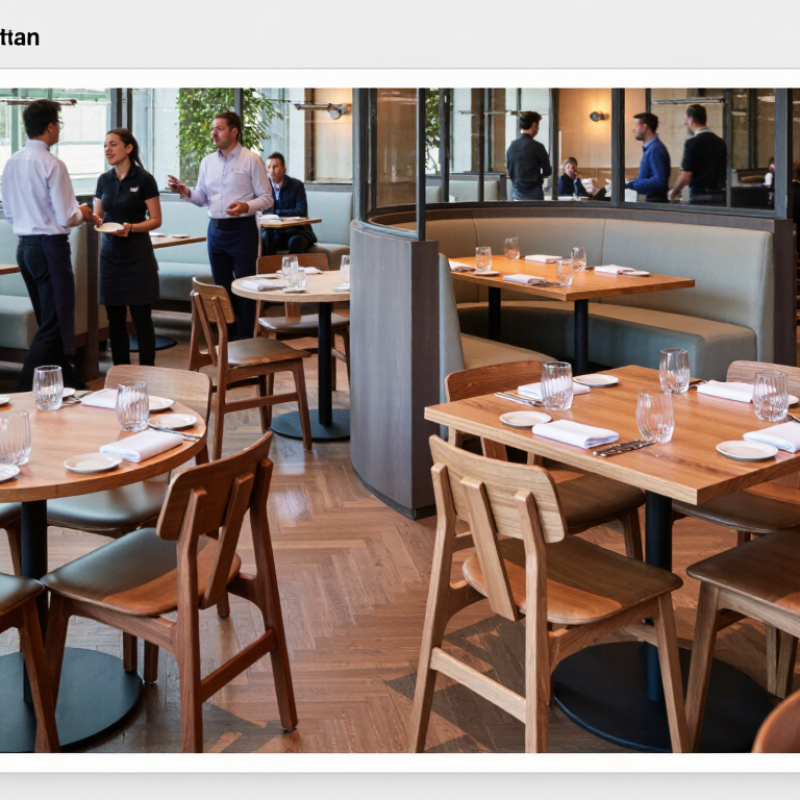
How to Choose Restaurant Furniture Tables in 2026?
Define Restaurant Table Needs by Space, Service Style, and Customer Flow
A practical furniture assessment starts with the room, not the catalog. Measure usable floor space after counters, columns, doors, and service stations are marked. Leave clear paths for staff carrying hot plates. A 70-centimeter gap may feel acceptable empty, but crowded service quickly exposes its limits. Sketch peak-time movement before choosing table sizes. Small errors become expensive.
Service style should guide the table shape and flexibility. A full-service dining room may need stable two- and four-person tables that can join during busy evenings. Fast-casual spaces often benefit from compact tables, durable edges, and quick-clean surfaces. Shared tables can increase seating, yet they may reduce privacy. The right answer depends on your guests.
Customer flow deserves a real-world test. Place temporary tables on the floor and observe where queues form, where chairs collide, and where servers turn. Watch lunch and dinner separately. A layout that works at noon may fail at 7 p.m. Consider wheelchair access, stroller space, and comfortable chair movement. Some planning assumptions will be wrong. That is useful. Revise the layout before ordering, and check whether each table supports service without making the room feel cramped.
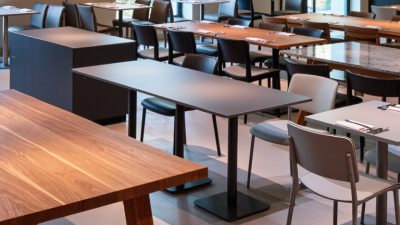
Choosing restaurant tables in 2026 starts with service conditions, not showroom appearance. A busy dining room needs surfaces that tolerate heat, spills, repeated wiping, and daily impact. In my experience, table material affects labor as much as customer comfort. That detail is easy to miss. Solid wood offers warmth and can be repaired, but standing water may raise its grain. Use a durable finish, sealed edges, and a cleaning routine staff can follow.
Compact laminate handles moisture, sauces, and frequent cleaning with little fuss. It suits fast-paced service, though chipped corners are difficult to disguise. High-pressure laminate provides design flexibility and a practical price, yet weak edging can fail. Inspect the underside, seams, and edge banding before purchase.
A beautiful top cannot rescue poor construction. For open kitchens or outdoor-adjacent areas, stainless steel resists stains and heat. However, fingerprints and noise can reduce perceived comfort.
Stone and engineered surfaces feel substantial, but their weight complicates moving and floor protection. Porous stone requires careful sealing, especially near coffee stations and salad bars. Ask suppliers for abrasion, stain, moisture, and heat-resistance evidence. Do not rely on a sample alone. Test a corner with realistic cleaners and a hot serving dish. I once favored appearance over maintenance and underestimated closing-time labor. I was wrong. Recheck the details.
How to Choose Restaurant Furniture Tables in 2026?
Choose Table Shapes and Sizes for Flexible Seating Arrangements
A flexible dining room begins with tables that can change roles. Round tables soften conversation and fit small groups. A 90-centimeter round table usually seats two to four guests comfortably. Larger rounds can waste edge space in narrow rooms. Measure carefully.
Square tables are efficient against walls and easy to combine. Two 75-centimeter squares can become a shared four-person table. Rectangular tables support couples, families, and larger parties. A 120-by-75-centimeter table works well for four diners, depending on chair width. Leave enough circulation space for servers. Many operators plan roughly 90 centimeters for a clear aisle, but local accessibility rules should guide the final layout.
From practical layout testing, lightweight tables with stable bases are easier to reconfigure between lunch and dinner. Pedestal bases reduce awkward chair conflicts. Folding tables offer storage benefits, though some feel less solid during service. That trade-off matters. I once selected oversized rectangles for a busy dining room. They looked impressive, but staff struggled to move around corners. The lesson was uncomfortable: visual scale is not operational capacity.
Use removable layouts during a trial service. Place chairs, trays, and a loaded serving cart inside the room. Check whether guests can pull chairs out without blocking others. Keep a few smaller tables for solo diners and pairs. Joinable tables create flexibility, but uneven seams can annoy guests. Test the connection hardware repeatedly.
Choose table shapes and sizes for flexible seating arrangements
Standard commercial table planning typically allows about 24 inches of table edge per diner. Two-top tables around 24–30 inches wide support flexible layouts, while larger rectangular and round tables accommodate groups more efficiently. Combining smaller square tables with movable rectangular tables makes it easier to adapt seating for couples, families, and larger parties.
A good restaurant table must support comfort, accessibility, stability, and staff efficiency. Measure the dining room before choosing table shapes or sizes. Leave enough clearance for wheelchairs, walking aids, and servers carrying full trays. A narrow route may look efficient on paper, but feel stressful during service.
Test the table with real chairs, not catalog measurements alone. Guests should sit without pressing their knees against the underside. A stable base matters on uneven floors. Push each corner gently and check for movement. I once preferred a stylish pedestal table, but its wide base blocked nearby foot traffic. The mistake became obvious during a busy lunch shift.
Staff efficiency depends on small details. Tables should allow servers to reach plates without twisting or leaning dangerously. Rounded corners can reduce collisions in tight aisles. Adjustable feet may help control wobbling, although they need regular inspection. Choose surfaces that resist heat, spills, and frequent cleaning. Check edges and joints every week. A beautiful table loses value when repairs interrupt service. Accessibility also requires honest observation. Watch how different guests move through the room, then revise the layout when real use exposes weaknesses.
Restaurant furniture tables should begin with a realistic budget, not a catalogue image. Include delivery, assembly, surface treatment, replacement parts, and possible installation delays. A low purchase price can become expensive after repeated repairs. Measure twice. A crowded dining room quickly exposes poor planning.
Quality needs hands-on checking whenever possible. Run your palm across the tabletop and inspect every edge, joint, weld, and underside. The surface should resist stains, moisture, heat, and daily cleaning without feeling fragile. Sit at the table and test its movement. A table that rocks slightly in a showroom may become unsafe on a busy floor. Confirm load capacity, flame performance where applicable, and compliance with local safety requirements. Ask for proof, not only promises.
Supplier reliability deserves equal attention. Request material specifications, test reports, warranty terms, production timelines, and clear replacement procedures. Contact previous commercial customers if permission is available. Their experience often reveals response times better than polished sales language. I once focused too heavily on appearance and underestimated spare-part availability. That mistake caused avoidable downtime. A supplier should answer technical questions directly and explain limitations honestly. Be cautious when documents are incomplete or delivery dates keep changing. Still, no evaluation is perfect. Wood can vary, finishes can age, and forecasts can fail. Leave a practical contingency in the budget, then record every agreement in writing.
| Furniture Type | Typical Capacity | Recommended Table Size | Indicative 2026 Budget per Table | Recommended Materials | Durability Target | Safety and Quality Checks | Supplier Reliability Evidence | Best-Fit Application |
|---|---|---|---|---|---|---|---|---|
| Two-Person Dining Table | 2 guests | 600–700 mm round or 600 × 600 mm square | US$120–US$350 | Commercial-grade laminate, solid wood, powder-coated steel, or compact surface | Minimum 5 years of regular commercial use with routine maintenance | Stable four-point base, rounded edges, levelers, moisture-resistant top, no exposed sharp fasteners | Pre-production sample, written warranty, spare-parts policy, documented inspection process, and traceable delivery schedule | Cafés, fast-casual restaurants, and compact dining areas |
| Four-Person Dining Table | 4 guests | 700–800 mm round or 700 × 1,200 mm rectangular | US$180–US$500 | High-pressure laminate, engineered wood with sealed edges, solid wood, or compact laminate | Minimum 5 years of regular commercial use | Tabletop deflection check, strong joint construction, stain resistance, heat resistance, and safe edge radius | Load-test records, consistent product specifications, quality-control photos, and clear replacement terms | Family dining, casual dining, and standard restaurant layouts |
| Six-Person Rectangular Table | 6 guests | 800–900 × 1,500–1,800 mm | US$300–US$800 | Solid wood, compact laminate, porcelain or sintered surface, and reinforced steel frame | Minimum 5–8 years of regular commercial use | Check frame rigidity, center support, anti-tip performance, water resistance, and clearance for guests’ knees | Verified production capacity, batch consistency records, agreed defect tolerance, and delivery milestone controls | Group dining, banquet areas, and high-volume service |
| Communal Dining Table | 8–12 guests | 800–1,000 × 2,000–3,000 mm | US$650–US$1,800 | Reinforced solid wood, compact laminate, or durable engineered stone with a commercial frame | Minimum 7 years of regular commercial use | Verify center-span support, anti-wobble performance, rounded corners, surface repairability, and floor protection | Engineering drawings, prototype approval, installation instructions, logistics plan, and after-sales response targets | Food halls, breweries, large casual restaurants, and shared dining spaces |
| Outdoor Dining Table | 2–6 guests | 600–800 mm round or 700–900 × 1,200–1,600 mm rectangular | US$220–US$900 | Powder-coated aluminum, stainless steel, treated hardwood, or weather-resistant compact laminate | Minimum 3–5 years outdoors, depending on climate and maintenance | Check corrosion resistance, UV stability, drainage, wind stability, non-slip feet, and safe folding mechanisms if applicable | Outdoor material specifications, coating test results, replacement-part availability, and climate-appropriate warranty terms | Terraces, patios, rooftops, and seasonal outdoor service |
| Bar-Height Table | 2–4 guests | 600–750 mm round or 600–750 × 1,200 mm rectangular; table height about 1,000–1,100 mm | US$250–US$750 | Compact laminate or sealed wood top with a steel or cast-iron base | Minimum 5 years of regular commercial use | Confirm base stability, anti-tip performance, footrest strength, correct height pairing, and adequate aisle clearance | Dimensional drawings, stability-test evidence, sample approval, packaging standards, and installation support | Bars, lounges, waiting areas, and high-turnover casual dining |
| Foldable or Nesting Table | 2–6 guests | 600–800 × 1,200–1,800 mm | US$250–US$850 | Commercial laminate or compact surface with powder-coated steel frame | Minimum 3–5 years with frequent setup and storage | Inspect locking mechanisms, pinch-point protection, hinge strength, caster brakes, and repeated-cycle performance | Cycle-test documentation, user instructions, replacement hardware, packaging protection, and clear return procedures | Flexible dining rooms, event spaces, training rooms, and temporary layouts |
| Accessible Dining Table | 2–4 guests, including wheelchair users | 700–900 × 1,200–1,500 mm with suitable knee clearance | US$250–US$900 | Durable laminate or compact surface with a stable pedestal or offset-leg base | Minimum 5 years of regular commercial use | Provide unobstructed knee space, stable access, rounded edges, adequate approach clearance, and no intrusive center supports | Dimensioned drawings, accessibility review, sample inspection, consistent tolerances, and documented corrective-action process | Restaurants serving diverse customers and layouts designed for inclusive access |
©2024 Pine Vista LLC, DBA Design Manufacturing Group. All Rights Reserved.


©2024 Pine Vista LLC, DBA Design Manufacturing Group. All Rights Reserved.