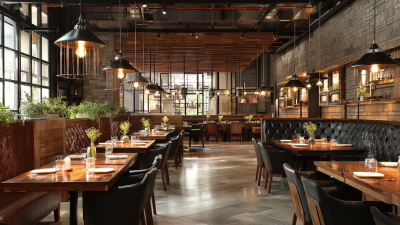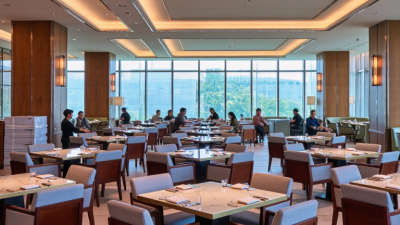

China’s hospitality furniture industry has developed far beyond basic tables and chairs. Today, leading manufacturers combine commercial durability, visual identity, ergonomic design, and flexible production. This makes China an important sourcing destination for Hospitality Restaurant Furniture.
David Rockwell, a respected hospitality designer, once said, “A restaurant is a theater.” His observation explains why furniture matters. A curved banquette guides movement. A solid-oak table changes the room’s warmth. A carefully upholstered chair can influence how long guests stay.
This guide introduces China’s top ten Hospitality Restaurant Furniture suppliers. It considers more than attractive product photos. Each supplier should be reviewed through manufacturing experience, material consistency, customization ability, export performance, and after-sales support. Restaurant furniture faces demanding conditions. Spilled drinks, constant cleaning, heavy use, and rushed service can expose weak construction quickly.
Details matter.
A reliable supplier should explain its frame materials, foam density, surface coatings, packaging methods, and quality-control process. Samples also deserve attention. A finish may look excellent online but appear uneven under restaurant lighting. That is an easy mistake to overlook.
The ranking is not absolute. Project budgets, design styles, order quantities, and delivery regions can change the best choice. Some suppliers excel at large hotel contracts. Others perform better with custom restaurant interiors or smaller trial orders.
There is no perfect list.
Buyers should verify current certifications, factory capabilities, production schedules, and references before signing contracts. This article offers a practical starting point, not a substitute for direct inspection. Used carefully, it can help restaurant owners, designers, and purchasing teams make more confident furniture decisions.
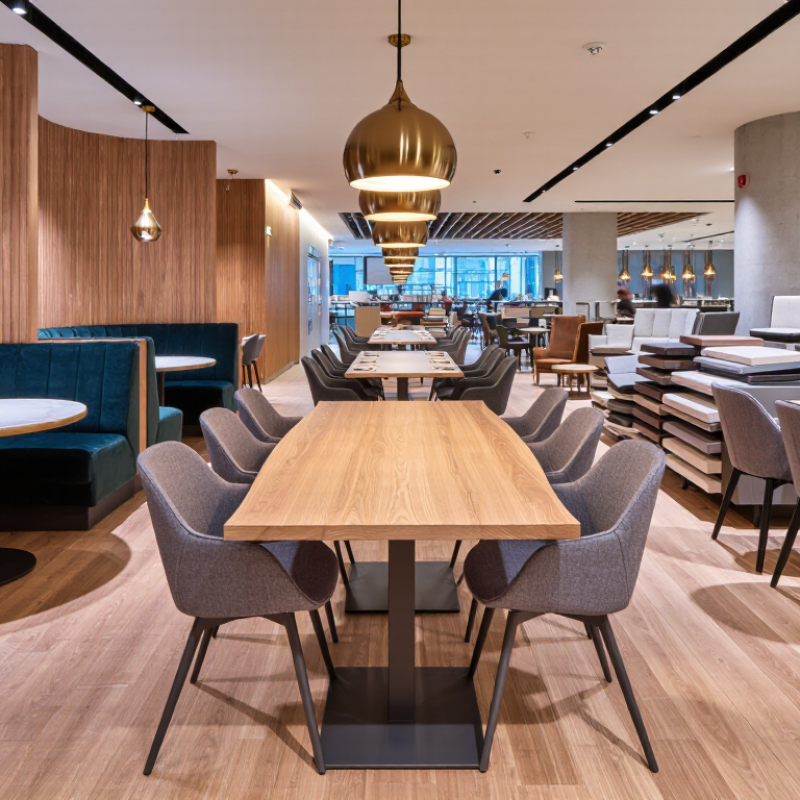
A hospitality restaurant furniture supplier in China is more than a factory with attractive tables. It understands service flow, guest comfort, safety, and project deadlines. In practice, the supplier should discuss aisle widths, chair stacking, tabletop heat resistance, and cleaning routines. Small details matter. A busy café needs furniture that survives repeated movement, spills, and rushed staff.
Professional capability appears in materials, construction, and documentation. A reliable supplier can explain wood moisture control, metal coating, foam density, edge treatment, and load testing without vague promises. It should provide drawings, finish samples, inspection records, and a clear production schedule. Hospitality projects often require custom dimensions, fire performance evidence, and consistent color across batches. Confirm these requirements before payment, not during installation.
Authority comes from verifiable projects, factory audits, trained quality staff, and responsive technical support. Ask for references with similar seating capacity and operating conditions. A sample may look excellent while hiding weak joints or uneven finishing. That risk deserves attention. I would inspect welds, drawer alignment, table stability, and packaging before shipment. No supplier gets everything perfect. Honest communication about delays, defects, and corrective action is more valuable than polished sales language. The strongest partner keeps records, accepts reasonable questions, and supports the restaurant after delivery.

China’s leading suppliers should be ranked through evidence, not online visibility. The selection begins with production capacity, export experience, material traceability, and hospitality project records. UN Tourism reported about 1.4 billion international tourist arrivals in 2024, nearly returning to 2019 levels. This recovery increases demand for durable dining furniture.
A practical ranking can assign 30% to product quality, 25% to manufacturing capability, 20% to delivery reliability, 15% to customization, and 10% to compliance.
Quality checks should include weld strength, surface resistance, moisture tolerance, and repeated chair-load tests. Factory audits should verify machinery, worker training, inspection records, and packaging procedures. A beautiful showroom proves little.
Smith Travel Research data showed continued global hotel performance recovery in 2024, making replacement cycles more important for restaurants and hotels. However, supplier rankings should also examine failure rates after installation. A table arriving on time still fails if its edge chips after three months. That detail is often missed. Buyer references, container loading photos, and independent inspection reports provide stronger evidence than marketing claims. The model is useful, but not perfect; regional labor costs and project complexity can distort comparisons.
China’s hospitality furniture sector is expanding with hotel development, restaurant renovation, and commercial design demand. A 2024 Mordor Intelligence report estimates the global hospitality furniture market at about USD 5.4 billion, with steady growth through 2029. This creates opportunities for China’s top 10 hospitality restaurant furniture suppliers, especially those offering custom tables, upholstered seating, bar counters, and outdoor products.
Reliable suppliers usually combine factory capacity with project experience. Buyers should inspect material samples, welding points, foam density, fabric testing, and packaging methods. A dining chair may look attractive online, yet its joints can loosen after months of daily use. That detail matters. Suppliers serving hotels and restaurants should also provide drawings, load-test records, fire-performance information, and clear replacement policies. The China National Bureau of Statistics continues to track furniture manufacturing as a major industrial category, supporting the country’s broad production base.
Pricing is only one part of the decision. Grand View Research identifies customization, durability, and sustainable materials as important contract-furniture trends. The strongest suppliers can adjust dimensions for narrow dining rooms, produce matching finishes, and control batch consistency. However, “top” rankings remain imperfect without independent audits, factory visits, and verified project references. Buyers should compare lead times, inspection procedures, export experience, and after-sales response before signing. A polished showroom is not enough.
When comparing China’s top ten hospitality restaurant furniture suppliers, inspect their product range before discussing price. Core products include dining tables, chairs, bar stools, benches, booth seating, outdoor sets, and service counters. A capable supplier should provide clear specifications, load ratings, finish samples, and installation drawings. Dining furniture must fit real service conditions, not only showroom photography.
Material selection affects durability, cleaning, and atmosphere. Solid wood offers warmth, while ash, oak, and rubberwood suit different budgets and grain preferences. Steel frames improve stability when welded and powder-coated correctly. Stainless steel works well near wet areas. Compact laminate and high-pressure laminate resist frequent wiping and moderate impact. Upholstery needs commercial-grade fabric, dense foam, and reinforced seams. Small details matter.
Customization may include table dimensions, edge profiles, leg shapes, colors, logos, booth curves, and space-saving layouts. Suppliers should confirm CAD drawings, prototype approval, packaging, and replacement-part policies. Ask for material certificates and applicable safety or emissions test reports. A polished sample can still hide weak joints. I have seen attractive chairs fail after careless stacking and daily dragging. That is why factory inspections, batch photos, and written quality standards remain valuable. Some suppliers promise unlimited customization, yet their tooling fees or minimum quantities change the decision. Check these limits early. Good communication is useful, but measurable documents are more reliable.
China Top 10 Hospitality Restaurant Furniture Suppliers?
A strong supplier should provide more than attractive tables and chairs. Check frame thickness, welding points, edge finishing, and surface resistance. Ask for load, abrasion, moisture, and stability test reports. A chair that feels solid in a showroom may loosen after months of daily use. Request a production sample before approving a large order. Photograph hidden joints and inspect them carefully.
Compliance depends on the destination market. Confirm material declarations, fire-performance documents, coating safety data, and formaldehyde testing where required. For restaurant furniture, ask whether surfaces tolerate cleaning chemicals and repeated disinfection. Documents should show testing dates, sample details, and laboratory information. Generic certificates create uncertainty. An independent inspection can verify dimensions, colors, quantities, and packaging before shipment.
Supplier support often determines the real project cost. Reliable teams answer technical questions clearly and provide drawings, installation guidance, spare parts, and replacement procedures. Confirm response times, warranty limits, packaging standards, and responsibility for damaged goods. Ask for references from similar hospitality projects, not only residential orders. A factory visit may reveal useful details, including storage conditions and quality-control records. Still, support promises can sound better than reality. Put every important agreement in writing. Allow some budget for revisions; even careful specifications can miss a practical detail.
| No. | Evaluation Dimension | Weight | What to Verify | Evidence to Request | Recommended Acceptance Benchmark | Relevant Standards or References |
|---|---|---|---|---|---|---|
| 1 | Product Quality Management | 15% | Consistency of dimensions, welds, joints, surface finish, upholstery, coating, and packaging across production batches. | Quality manual, inspection plan, incoming and final inspection records, non-conformance records, and corrective-action reports. | Documented inspection process covering raw materials, in-process production, final products, and packaging; corrective actions should be traceable to closure. | ISO 9001AQL sampling practice |
| 2 | Structural Strength and Durability | 15% | Load-bearing performance, joint strength, stability, fatigue resistance, scratch resistance, and corrosion resistance for commercial use. | Third-party test reports, product specifications, load ratings, test methods, and samples from current production. | Testing must match the intended use, product type, and destination market; results should identify the exact model, materials, and test date. | EN 16139EN 12520EN 581 |
| 3 | Material Traceability | 10% | Origin and specification of steel, aluminum, timber, plywood, MDF, laminates, foam, fabric, leather, glass, and hardware. | Material declarations, supplier invoices, batch records, bills of materials, and approved-material lists. | Each finished product should be linked to identifiable material batches and approved specifications; substitutions require written approval. | Bill of MaterialsBatch traceabilityMaterial declarations |
| 4 | Chemical and Environmental Compliance | 12% | Restrictions on hazardous substances in coatings, adhesives, textiles, plastics, foam, composite wood, and metal finishes. | Current laboratory reports, safety data sheets, restricted-substance declarations, and formal change-control records. | Compliance documents must correspond to the supplied materials and destination market; reports should come from a competent independent laboratory. | REACHRoHS where applicableTSCA Title VICARB Phase 2 |
| 5 | Fire and Safety Compliance | 10% | Ignition and flammability performance of upholstered seating, foam, curtains, panels, and other combustible components. | Fire-test reports, product construction details, foam specifications, fabric composition, and certificates for the target market. | Testing must use the final commercial construction, including fabric, filling, foam, and backing; generic material reports alone are insufficient. | Destination-country fire codesEN 1021CAL 117 where applicable |
| 6 | Factory Capacity and Process Control | 10% | Production lines, skilled labor, equipment, subcontracting controls, capacity during peak periods, and ability to reproduce approved samples. | Factory audit, process flow, capacity plan, equipment list, production records, and approved-sample control procedure. | Capacity claims should be supported by production records and a realistic capacity plan; critical outsourced processes must be disclosed and controlled. | Factory auditProcess controlApproved sample |
| 7 | Customization and Design Engineering | 8% | Ability to develop custom dimensions, finishes, upholstery, knock-down structures, shop drawings, prototypes, and installation details. | Technical drawings, engineering-change records, prototype history, finish samples, and sample approval forms. | Supplier should provide controlled drawings, revision numbers, material specifications, and documented approval before mass production. | CAD drawingsPrototype approvalEngineering change control |
| 8 | Packaging and Logistics Readiness | 8% | Protection against moisture, abrasion, impact, deformation, and mixed-model loading during inland transport and international shipping. | Packaging specification, carton test records, container-loading plan, packing list, labeling samples, and damage records. | Packaging should be product-specific, moisture-conscious, clearly labeled, and validated through sample shipment or documented transport testing. | ISTA methods where applicableISPM 15 for solid-wood packaging |
| 9 | Delivery Reliability and Order Control | 7% | Quotation accuracy, production lead time, order confirmation, milestone visibility, on-time shipment, and handling of delays. | Historical delivery records, production schedule, order-status reports, commercial terms, and escalation procedure. | Use a written service-level agreement with agreed lead times, milestone updates, delay notification rules, and remedies for critical schedule failures. | Purchase order controlsOn-time delivery KPIIncoterms 2020 |
| 10 | After-Sales Support and Warranty | 5% | Response speed, spare-parts availability, replacement policy, installation guidance, defect resolution, and warranty coverage. | Warranty terms, claims workflow, spare-parts list, service contacts, response-time commitments, and reference project records. | Warranty terms should define coverage, exclusions, claim evidence, response deadlines, replacement responsibilities, and the duration of spare-parts support. | Written warrantyService-level agreementSpare-parts plan |
©2024 Pine Vista LLC, DBA Design Manufacturing Group. All Rights Reserved.


©2024 Pine Vista LLC, DBA Design Manufacturing Group. All Rights Reserved.