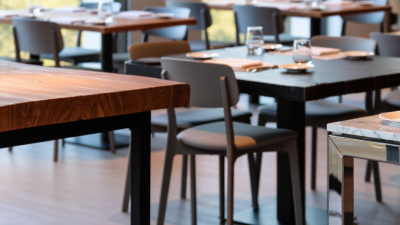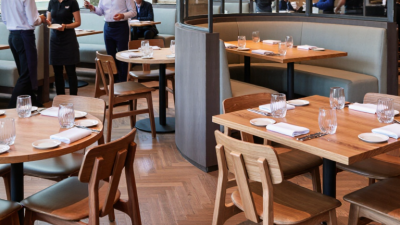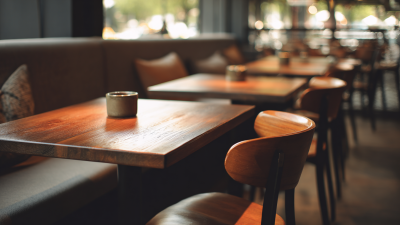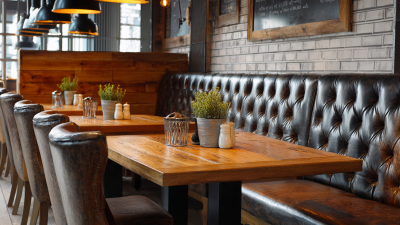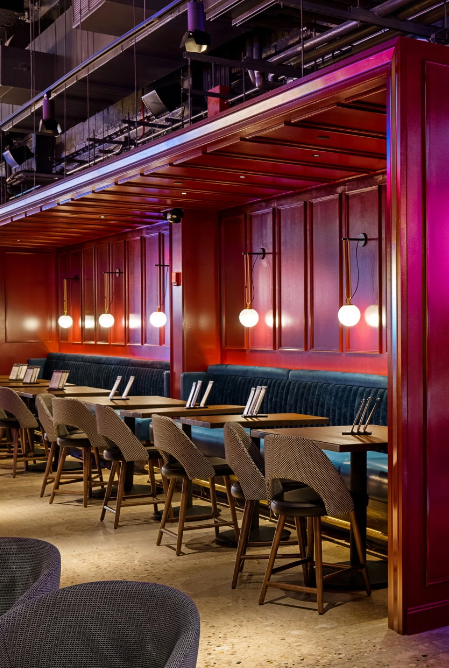

Restaurant Furniture Tables are more than surfaces for plates. They shape how guests move, share space, and settle in. For Chinese manufacturers, the challenge is balancing sturdy construction, easy cleaning, flexible sizes, and export-ready consistency. Small details count: a stable base on uneven flooring, sealed edges that resist spills, and finishes that still look good after repeated service.
Industry context helps explain the opportunity. The National Restaurant Association’s 2024 State of the Restaurant Industry report projected U.S. restaurant sales of $1.1 trillion. That figure measures restaurant sales, not furniture purchases, but it signals the scale of the dining sector. Grand View Research’s restaurant furniture market analysis offers a closer view of product and regional trends. Buyers should still compare specifications carefully; broad market growth does not guarantee every table fits a particular concept.
Restaurateur Danny Meyer wrote, “Hospitality is present when something happens for you. It is absent when something happens to you.” That principle offers a useful test for table design: does the furniture quietly support a guest’s experience? Comfort matters. So does maintenance. This guide examines leading Restaurant Furniture Tables manufacturers in China, including their materials, production capabilities, customization options, and quality controls. One caution remains: polished product photos cannot show long-term stability or finish wear. Ask for clear specifications and samples before making a decision.
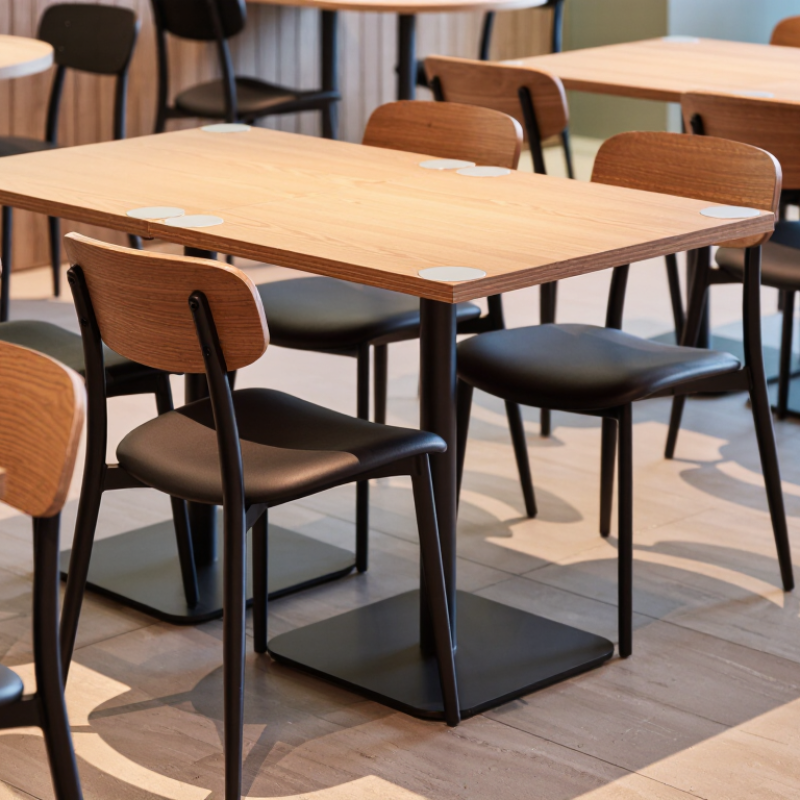
Top Restaurant Furniture Tables Manufacturers in China
Overview of China’s Restaurant Table Manufacturing Industry
China’s restaurant-table industry sits within a much larger furniture manufacturing base. The National Bureau of Statistics reported that above-designated-size furniture manufacturers recorded 655.7 billion yuan in operating revenue in 2023, down 4.4% year on year. This figure covers furniture broadly, not restaurant tables alone. It is useful context, but not a direct measure of table demand.
Production combines solid wood, engineered panels, metal frames, stone surfaces, and laminated tops. A commercial table must handle repeated cleaning, knocks from chair legs, and years of daily use. Buyers often compare edge sealing, joint construction, base stability, and replacement-part availability—not just the finish in a showroom. Small details matter.
Factories commonly offer custom dimensions and finishes for cafés, hotels, and dining chains. Yet customization can complicate quality checks: a sample may look consistent while a larger batch varies in color or fit. That risk deserves attention. The NBS figures describe larger enterprises, so they may not fully reflect smaller workshops that also serve restaurant projects.
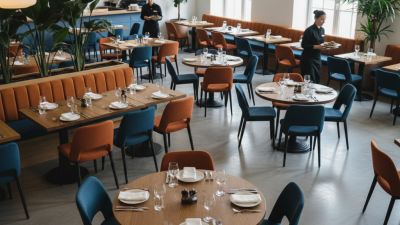
Restaurant tables in China are made from solid wood, engineered panels, metal, stone, or combinations of these materials.
Solid wood offers visible grain and can be refinished, but changes in humidity may cause movement. Engineered wood provides a more uniform surface and can reduce material costs; its durability depends on panel quality and edge sealing.
Steel frames support heavy use, while aluminum is lighter. Compact laminate resists stains and routine spills, making it practical for busy dining rooms. Stone feels substantial, though its weight can complicate delivery and installation.
There is no perfect choice.
Production methods vary with the design.
Wood components are cut, dried, shaped, and joined; moisture control matters because poorly seasoned timber may warp later. Panels are often CNC-cut, then fitted with edge banding to protect exposed edges.
Metal frames are cut and welded, with joints checked before powder coating. Surfaces may be polished, laminated, or sealed, depending on the material.
Details matter.
Buyers can inspect the underside, table edges, welds, and leg attachments on a sample. A smooth top alone proves little.
Even careful production can leave small finish variations, so specifications should state acceptable tolerances, surface care, and packaging requirements.
These checks are easy to overlook.
They can prevent avoidable problems after shipment.
Evaluating Chinese table manufacturers requires more than comparing price lists and catalogue photos. CSIL’s World Furniture Outlook 2024 estimates that China produces roughly 36% of the world’s furniture. That scale offers buyers broad sourcing options, but it does not verify any factory’s quality. Treat national output as context, not evidence of a supplier’s performance. Ask for production records, material specifications, and recent test reports tied to the exact table model. A certificate for a similar product is not enough.
For commercial tables, check stability, strength, durability, and finish resistance. EN 15372 sets safety and performance requirements for non-domestic tables; ask whether testing covered the intended use and load conditions. Inspect samples for sharp edges, uneven welds, loose fittings, and wobble on a hard floor. Request tabletop moisture readings and traceability for wood-based materials. Numbers are not enough. A polished audit sheet can still miss inconsistent production between batches, so compare samples with finished goods during an audit. Confirm packaging tests, spare-part availability, and realistic lead times in writing. Some buyers focus heavily on unit price; that can be a costly blind spot.
Profiles of leading restaurant table manufacturers in China should focus on verifiable production details, not polished catalog photos. China National Furniture Association data reported about RMB 655.7 billion in operating revenue for furniture enterprises above designated size in 2023. This shows the sector’s scale, but it does not prove a supplier specializes in restaurant tables. Buyers should check factory audits, monthly output, export experience, and documented quality checks. Ask how a maker tests table stability, edge durability, and resistance to stains from coffee or oil. A clear answer matters.
Look closely at materials and construction. A supplier may offer solid wood, veneer, compact laminate, or metal bases, but each suits different cleaning routines and budgets. Request a sample, written specifications, and a finish swatch under ordinary indoor lighting. Confirm table-height tolerances and packaging protection, especially for long-distance shipping. A neat sample is useful; repeatable production is better. Still, even a detailed profile may leave unanswered questions about after-sales support.
Tips: Ask for recent inspection records and a packing video. Compare like-for-like specifications, not just unit prices. Check whether replacement parts are available. Small details count. A slight wobble becomes noticeable during a busy lunch service.
Sourcing restaurant tables from Chinese manufacturers starts with a clear brief, not a broad request for a low price. List the table sizes, expected daily use, indoor or outdoor setting, and preferred materials. Include practical details, such as a 70-centimeter tabletop, rounded corners, or adjustable feet for uneven floors. Small omissions can create costly misunderstandings.
Ask each supplier for a current product specification, material details, production lead time, and packaging information. Confirm whether the quoted price includes the tabletop, base, hardware, and export packaging. Request a sample or a pre-production unit when the order is substantial. Check its surface finish, edge quality, wobble, and how easily staff can clean it. A drawing helps, but it cannot show every defect.
Before paying a deposit, agree in writing on approved materials, dimensions, acceptable finish variations, inspection timing, and what happens if items arrive damaged. Ask for dated production photos and arrange an independent inspection if the order warrants one. Compare quotations on the same specifications; the cheapest offer may use thinner panels or simpler packaging. Not every detail is obvious. I would also leave time for one round of corrections, since even a careful specification can miss how a table feels in a busy dining room.
Compare common finished-height targets when discussing table specifications with manufacturers.
These representative heights fall within commonly used ranges: dining tables about 71–76 cm, counter-height tables about 86–91 cm, and bar-height tables about 101–107 cm. Confirm the finished dimensions, chair or stool seat height, and project requirements with your supplier.
©2024 Pine Vista LLC, DBA Design Manufacturing Group. All Rights Reserved.


©2024 Pine Vista LLC, DBA Design Manufacturing Group. All Rights Reserved.